

Class 6 Science Solved Model Papers: CBSE Class 6 Science Sample Paper Set 23
Access comprehensive sample question papers for Class 6 Science using the CBSE Class 6 Science Sample Paper Set 23. Designed to align with the 2026-27 CBSE academic guidelines, these model papers help students assess their exam readiness and understand current marking schemes.
Download Class 6 Science Sample Paper PDF
View or download the dedicated CBSE Class 6 Science Sample Paper Set 23 resource below. Engaging with these sample papers under timed conditions ensures continuous academic progress and mastery of the 2026-27 exam format.
SECTION- A (PHYSICS) [27]
Q.1 Luminous bodies- (1)
(i) absorb light energy
(ii) emit light energy
(iii) are always a natural source
(iv) are transparent
Q.2. Which of the following materials is an electric insulator?
(i) aluminium
(ii) gold
(iii) rubber
(iv) graphite
Q.3. What kind of medium is mineral water? (1)
(i) transparent
(ii) translucent
(iii) opaque
(iv) neither totally transparent nor translucent
Q.4. Which one of the following is a luminous source? (1)
(i) star
(ii) moon
(iii) glow signboard
(iv) all of them
Q.5. Complete the ray diagram & (2)
identify the device A.
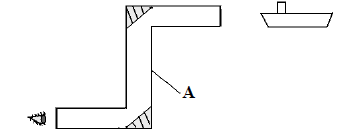
Q.6. Fill in the blanks:- (2)
(xiii) When heavenly bodies cast shadows on each other, an ___________ is formed.
(xiv) An electric bulb with a broken filament is ___________, & will not glow in an electric circuit.
Q.7. Give one word:- (2)
(i) A very simple camera that forms an inverted image of an object on a screen.
(ii) Materials generally used to make non- conducting part of an appliance.
Q.8. Write the function of the following: (2)
(i) Conductors
(ii) Electric switch
Q.9. Give reason, why? (3)
(i) Nitrogen & argon gases are filled in electric bulb.
(ii) Mirrors are used in periscopes.
(iii) A translucent screen is used in a pin- hole camera.
Q.10. Draw the diagram of an electric bulb & label the following: (3)
(i) terminals
(ii) filament
(iii) support wires
(iv) glass case
Q.11. (i) What are the necessary conditions to form a shadow? (any two)
(ii)Differentiate between an opaque & a translucent object based upon the type of shadow formed.
Q.12. Paheli made a conduction tester to test the conductivity of Nylon rope and Iron key. (1.5+1.5=3)
(ii) In which case the bulb will glow and why?
(iii) Draw a circuit diagram to show the same.
Q.13. (i) What is an electric cell? (1 + 2= 3)
(ii)Draw the diagram of an electric cell & mark its terminals. Also indicate the direction of the current flowing in a wire, connected to it.
SECTION- B (CHEMISTRY) [26]
Q.14 Choose the correct answer from the following: (1 × 4 =4)
(i) We can separate iron fillings from a mixture of iron fillings and sand by the method of:-
(a) Magnetic separation
(b) Handpicking
(c) Sieving
(d) Filtration
(ii) The process of conversion of a liquid to its vapour state is called:
(a) Condensation
(b) Distillation
(c) Evaporation
(d) Both (a) and (c)
(iii) Which of the following involves a fast and irreversible change:
(a) Burning of a candle
(b) Burning of a cracker
(c) Growth of a child
(d) Rusting of iron
SECTION- C (BIOLOGY) [27]
Q.23.(i) The strands/ fibres which join bone to bone are called ___________.(1)
(ii)The body part that is protected by the backbone is called _____________.
Q.24.Give the term for the following: (1)
(m) Small changes that take place in the body of a single organism over short period of time to overcome small changes in surroundings.
(n) The process of breakdown of food to obtain energy.
Q.25.Which of the following material will not rot when buried in ground: (1)
Polythene bag, Paper bag, Vegetable peel, Broken glass.
Q.26.Name the type of joint present in: (1)
(o) Wrist (p) Between upper jaw & skull
Q.27.Which of the non living things listed below, were once part of a living thing: (1)
Woollen shawl, Rubber, Pen, Chalk
Q.28.Choose the correct option:- (1)
(q) When contracted muscles become
(a) Long & thin
(b) Short & thick
(c) Soft & loose
(d) None of these
(r) Which of these animals has backbone (endoskeleton)
(a) Earthworm
(b) Snail
(c) Snake
(d) Cockroach
Please click the below link to access CBSE Class 6 Science Sample Paper Set W
Free study material for Science
Download CBSE Sample Papers: Class 6 Science
Access Sample Papers for Class 6 Science
Review model practice papers for Class 6 Science. Working through the CBSE Class 6 Science Sample Paper Set 23 under simulated test conditions at home ensures complete familiarity with upcoming school evaluations.
Key Advantages of Solving CBSE Class 6 Science Sample Paper Set 23
- Exam Blueprint: Understand mark allocations and structural guidelines relevant to Class 6 evaluations.
- Targeted Improvement: Identify weak areas in Class 6 Science requiring focused revision.
- Pacing & Precision: Practice mixed question formats to build execution speed and ensure timely paper completion.
Steps to Follow After Completing CBSE Class 6 Science Sample Paper Set 23
- Self-Evaluation: Score your answers using official guidance to track your academic progress.
- Mistake Correction: Class 6 pupils must re-solve questions answered incorrectly to master the correct method.
- Continuous Practice: Take additional Science sample modules online to maximize preparedness for CBSE evaluations.
FAQs
You can download the complete PDF for CBSE Class 6 Science Sample Paper Set 23 for free from StudiesToday.com. Our resources for Class 6 Science are updated for the latest academic session and follow the official exam pattern.
Yes, CBSE Class 6 Science Sample Paper Set 23 comes with detailed, teacher-verified solutions. We have provided step-by-step answers for Science to help students of Class 6 understand correct methodology and marking scheme.
Practicing this Science paper helps in time management and identifying important topics. For Class 6, solving mock papers is the best way to gain confidence and reduce exam-day anxiety.
Yes, all our study materials for Class 6 Science are provided in a mobile-friendly PDF format. You can easily download CBSE Class 6 Science Sample Paper Set 23 on your mobile device.