

Sample Question Papers for Class 6 Science
Review targeted exam resources with the CBSE Class 6 Science Sample Paper Set 21. Built according to official CBSE standards for the 2026-27 academic year, these downloadable Class 6 Science sample papers support effective revision and performance tracking.
Practice Class 6 Science Exam Papers
View or download the dedicated CBSE Class 6 Science Sample Paper Set 21 resource below. Engaging with these sample papers under timed conditions ensures continuous academic progress and mastery of the 2026-27 exam format.
SECTION - A
Q1. Define a balanced diet. 1
Q2.Why is burning of candle an example of an irreversible change? 1
Q3. What is the nature of the image formed in a pin hole camera.? 1
Q4.Lions have eyes in front while deer have eyes on the side. How do these adaptations help the lion & the deer? 2
Q5. Suggest an activity to show that light travels in a straight line. 2
Q6. Name a device which changes the direction of light that falls on it. 2
What is this phenomenon known as?
Q7. Give two examples each of natural and artificial luminous objects. 2
Q8 .a) Why is Vitamin C necessary for us?
b) Name any two food materials which are rich in Vitamin C. 1+1
Q9. Define a) Rectilinear motion b) Periodic motion 2
Q10. In which units of length should we measure the following? 2
(a) Thickness of your science book
(b) Your height
(c) Distance between your house and the school
(d) Length of your pen
Q11. Differentiate between reversible & irreversible changes. (Any 2 points) 2.
Q12. a) Explain how, a metal wheel is fixed around the wooden wheel of a cart.
b) Heating of coal tar for repairing roads is a reversible change. Explain. 2
Q13. a) Define nutrients.
b) Name any two main types of carbohydrates which are found in our diet.
c) Discuss the importance of roughage in our diet. 1+1+1
Q14. a) What do you mean by the term respiration?
b) Why is respiration necessary for living organisms?
c) Name the breathing organs for: earthworm & fish. 1+1+1
Q15. a) How does a blacksmith change a piece of iron into different tools?
b) How is inflating a balloon different from bursting an inflated balloon? 1+2
Q16. Write three precautions that we should take while measuring a length using a scale? 3
Q17. (a) How are shadows formed?
(b) What are the three necessary conditions for the formation of a shadow?
(c) Do shadows give us complete information about the object? 3
Q18. a) How does thick fur help a snow leopard to live in mountain regions?
b) Dolphins do not have gills, then how do they breathe in water?
c) Give any two adaptive features of the aquatic plants. 1+1+1
Q19. a) Classify the following as reversible or irreversible change:
i) Melting of ice
ii) Dissolution of salt in water
iii) Breaking a glass
iv) Folding of paper to make an aeroplane.
b) A potter shapes pots out of clay. He then bakes the pot in an oven. Identify the reversible & irreversible changes taking place in this process. 2+1
Q20. (a) When is a body said to be in periodic motion? 1+2
(b) Name the type of motion exhibited by the following:
(i) Second's hand of the clock
(ii) Needle of a sewing machine
(iii) The falling of a stone.
(iv) Sprinters in a 100-metre race
21. a) How will you test for the presence of fats in a food item?
b) Cooking of food has many beneficial effects, but at the same time some cooking practices also lead to loss of nutrients. List any two practices that lead to loss of nutrients. 1+2
Q22.a) What are deficiency diseases?
b) Name the mineral whose deficiency causes Goiter. Give any one of its source.
c) Write two symptoms of Goiter. 1+1+1
Q23.a) A bag of cement lying in the open gets wet due to rain. Can the change which
takes place in cement on getting wet be reversed by drying? Explain.
b) Why are proteins also known as “body building foods”? 2+1
Q24.a) How do plants get rid of their waste materials?
b) What happens if we move from a dark room into bright sunshine suddenly? Explain your answer in terms of response & stimulus.
c) Name two plants which can be reproduced from cuttings. 1+1+1
Q25. . (a) Differentiate between transparent, translucent and opaque objects. 3+2
(b) Categorize the following objects into transparent, translucent and opaque
(i) tracing paper
(ii) glasses in your spectacles
(iii) an eraser
(iv) a mirror
Q26. (a) Name any two commonly used units of measurements in ancient time 1+1+3
(b) Why did a need to develop a uniform system of measurement arise?
(c) Convert the following:
(i) 34m = ------------------------------mm
(ii) 42cm = ------------------------------m
(iii) 1020m= --------------------------km
Q27.a) Define a habitat.
b) Write any four adaptive features of a camel which enable it to live in deserts.
c) How do streamlined body & flat fins help a fish inside water?
SECTION - B
(each question carries one mark.)
1. While measuring diameter of a thin thread, thickness of 50 turns is measured as 5 cm, The diameter of the thread should be
(a) 10cm (b) 0.1cm (c) 2.50m (d) 0.55m
2. Which of the following is the most suitable unit for measuring the diameter of a thread?
(a) cm (b) m (c) km (d) all of them
3. Which of the following is a correct step for finding area of an irregular surface using a graph paper
(a) No. of complete squares + No. of incomplete squares
(b) No. of complete squares + ½ No. of incomplete squares
(c) ½ No. of complete squares + No. of incomplete squares
(d) ½ No. of complete squares + ½ No. of incomplete squares
4. Out of the following materials, select the ones that you require for measuring area of an irregular surface using a graph paper
(i) A Leaf, A pencil
(ii) A pencil & a graph paper
(iii) A thread & A pencil
(iv) A graph paper, A Leaf & A pencil
5. What is the colour of CS2
a) White b) Colourless c) blue d) yellow
6. Choose the odd one out from the following combination of liquids.
(a) Water + CS2 (b) Alcohol + water (c) Oil + water (d) Vinegar + oil
7. Which of the following part of a plant is not a part of shoot system?
(a) stem (b) root (c) Leaf (d) Flower
8. Which of the following part of a flowering plant carries out the process of photosynthesis:
(a) stem (b) Flower (c) Leaf (d) Fruit
9. Which of the following forms the seeds of a plant?
(a) ovary (b) ovules (c) Leaf (d) Fruit
10. Which of the following is not a function of a root?
(a) It absorbs mineral and water from the soil and gives it to stem
(b) It fixes a plant into soil and provides it a firm grip
(c) It stores food sometimes
(d) It makes food
11. Which of the following are used to test the presence of starch in a food item?
(a) Water (b) Vinegar (c)Cooking oil (d) Iodine solution
12. What colour change do you observe in the test for starch?
(a) Yellow (b) blue- black (c) pink (d) Green
13. which of the following food items will show the change in colour when tested for starch
(a) Yogurt (b) Pulses (c) Milk (d) Rice
14. Name the part of the plant shown in the following figure.
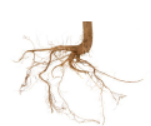
(a) Root (b) stem (c) leaf (d) Flower
15. “m 2 “ the unit of which of the following physical quantities?
a) Volume b) area c) perimeter d) circumference
16. A millimeter graph paper is used for measurement of area as:
a) It is easy to use
b) It gives more accurate measurements
c) Bigger units of measurement cannot be used
d) None of the above
17. Starch is one of the types of:
a) Fats b) proteins c) carbohydrates d) minerals
18. The function of stem is to
a) To exchange gases
b) To take mineral & water from soil
c) To distribute minerals & water to all parts of the plant
d) None of the above
Please click the below link to access CBSE Class 6 Science Sample Paper Set U
Free study material for Science
CBSE Class 6 Science Sample Paper Set 21 & Sample Question Papers for Class 6 Science
Access Sample Papers for Class 6 Science
Review model practice papers for Class 6 Science. Working through the CBSE Class 6 Science Sample Paper Set 21 under simulated test conditions at home ensures complete familiarity with upcoming school evaluations.
Why Practice Class 6 Science Sample Papers?
- Exam Blueprint: Understand mark allocations and structural guidelines relevant to Class 6 evaluations.
- Targeted Improvement: Identify weak areas in Class 6 Science requiring focused revision.
- Pacing & Precision: Practice mixed question formats to build execution speed and ensure timely paper completion.
Post-Practice Strategy for Class 6 Science
- Review Solutions: Evaluate your completed papers using expert-verified guidance inside our solution sets.
- Target Weaknesses: Class 6 students should analyze missed questions to rectify conceptual misunderstandings.
- Deep Revision: Re-read sections in the NCERT book for Class 6 Science to clear doubts before solving items again.
FAQs
You can download the complete PDF for CBSE Class 6 Science Sample Paper Set 21 for free from StudiesToday.com. Our resources for Class 6 Science are updated for the latest academic session and follow the official exam pattern.
Yes, CBSE Class 6 Science Sample Paper Set 21 comes with detailed, teacher-verified solutions. We have provided step-by-step answers for Science to help students of Class 6 understand correct methodology and marking scheme.
Practicing this Science paper helps in time management and identifying important topics. For Class 6, solving mock papers is the best way to gain confidence and reduce exam-day anxiety.
Yes, all our study materials for Class 6 Science are provided in a mobile-friendly PDF format. You can easily download CBSE Class 6 Science Sample Paper Set 21 on your mobile device.