

Download CBSE MCQs for Class 9 Mathematics: Chapter 06 Lines and Angles
Review structured MCQ sets for Class 9 Mathematics Chapter 06 Lines and Angles. Built according to official CBSE guidelines, these downloadable questions support daily revision and core concept reinforcement.
Chapter-wise Objective Questions: Chapter 06 Lines and Angles
View or download the dedicated Chapter 06 Lines and Angles MCQ resource below. Practicing these 50 objective questions regularly builds familiarity with standard exam patterns and helps secure higher marks in final Mathematics evaluations.
Question. If a ray stands on a line then the sum of the adjacent angles so formed is
(a) 1000
(b) 1800
(c) 900
(d) 3600
Question. The sum of all the angles around a point is
(a) 1000
(b) 1800
(c) 900
(d) 3600
Question. The sum of all the angles formed on the same side of a line at a given point on the line is
(a) 1000
(b) 1800
(c) 900
(d) 3600
Question. The angle which is four times its complement is
(a) 600
(b) 300
(c) 450
(d) 720
Question. The angle which is five times its supplement is
(a) 1500
(b) 1800
(c) 900
(d) 3600
Question. The measure of an angle which is equal to its complement is
(a) 600
(b) 300
(c) 450
(d) 150
Question. The measure of an angle which is equal to its supplement is
(a) 1000
(b) 750
(c) 900
(d) 600
Question. If two parallel lines are intersected by a transversal, then the bisectors of the two pairs of interior angles enclose
(a) a square
(b) a rectangle
(c) a parallelogram
(d) a trapezium
Question. Two adjacent angles on a straight line are in the ratio 5 : 4. then the measure of each one of these angles are
(a) 1000 and 800
(b) 750 and 1050
(c) 900 and 900
(d) 600 and 1200
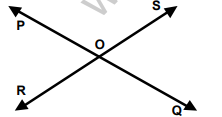
Question. Two lines PQ and RS intersect at O. If
(a) 1200
(b) 1300
(c) 900
(d) 1500
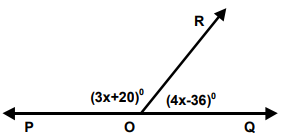
Question. In the adjoining figure the value of x is
(a) 250
(b) 280
(c) 300
(d) 600
Question. If two straight lines intersect each other in such a way that one of the angles so formed measure 900, then each of the remaining angles measures is
(a) 500
(b) 750
(c) 900
(d) 600
Question. In fig. AB and CD intersect each other at O. If ∠AOC + ∠BOE = 700 and ∠BOD = 400 then the value of ∠BOE is 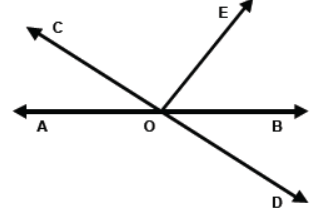
(a) 300
(b) 1100
(c) 1200
(d) 1500
Question. In fig. POQ is a line, ∠POR = 4x and ∠QOR = 2x then the value of x is 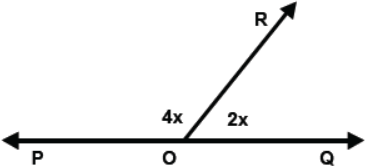
(a) 500
(b) 200
(c) 300
(d) 900
Question. In the given fig. ∠AOC + ∠BOD = 750, then the value of ∠COD is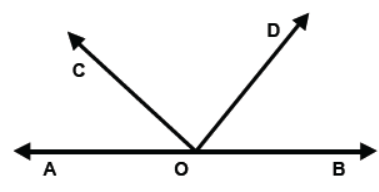
(a) 1300
(b) 105
(c) 1200
(d) 750
Question. In the fig. the value of y is: 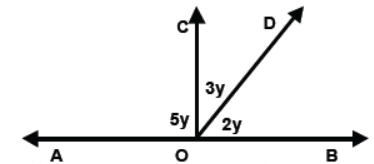
(a) 600
(b) 180
(c) 300
(d) 900
Question. In fig., the value of x is: 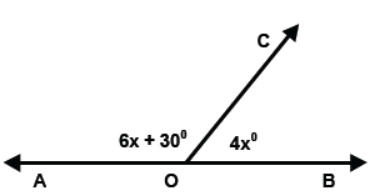
(a) 600
(b) 150
(c) 300
(d) 450
Question. In fig. ∠POR and ∠QOR form a linear pair if a – b = 800 then values of a and b respectively are: 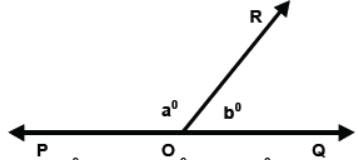
(a) 1300 and 500
(b) 500 and 1300
(c) 600 and 1200
(d) 400 and 1400
Question. For two parallel lines sum of interior angles on the same side of a transversal line is
(a) 1000
(b) 1800
(c) 900
(d) 3600
Question. In fig., lines XY and MN intersect each other at point O. If ∠POY = 900 and a : b = 2 : 3 then the value of ∠C is 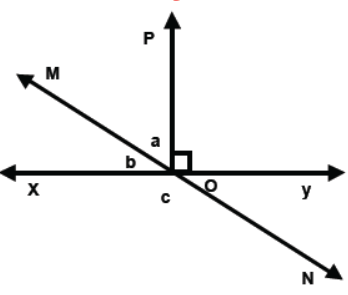
(a) 1400
(b) 1200
(c) 800
(d) 950
Question. In fig. ∠XYZ = 640 and XY is produced to point P. If ray YQ bisect ∠ZYP then the value of ∠XYQ is 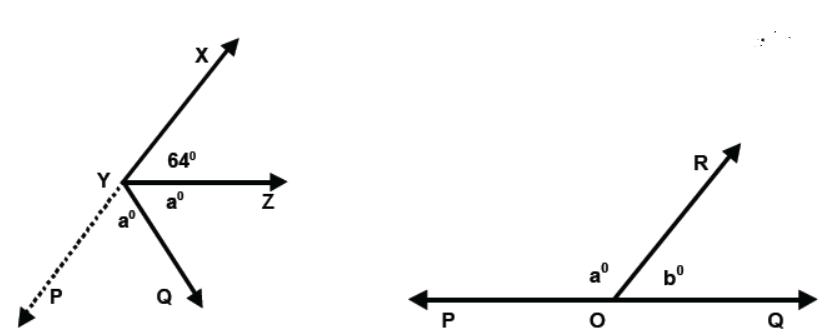
(a) 1220
(b) 1260
(c) 3020
(d) 2580
Question. In fig., b is more than one-third of a right angle than a. The values of a and b are:
(a) 950 and 850
(b) 1050 and 750
(c) 600 and 1200
(d) 650 and 1150
Question. In fig., n – x = 30 then values of x and n are: 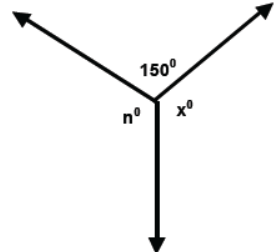
(a) 1260 and 1290
(b) 1250 and 280
(c) 1500 and 950
(d) 1350 and 650
Question. In fig., q || r and p is transversal. If ∠1 and ∠2, 3 : 2 then the values of ∠3 and ∠4 are: 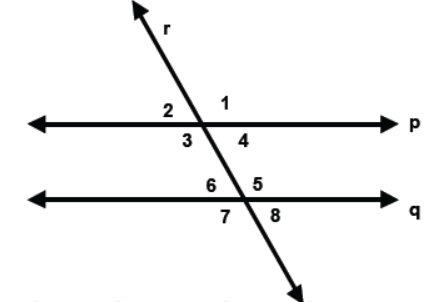
(a) 1080 and 720
(b) 720 and 1080
(c) 750 and 1050
(d) 850 and 950
Question. In fig. the values of x and y are equal to: 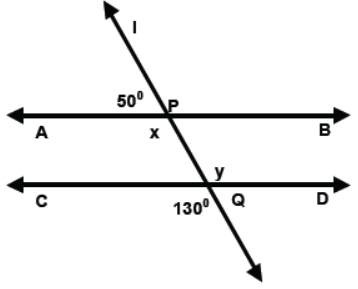
(a) 1300
(b) 1500
(c) 1600
(d) 1350
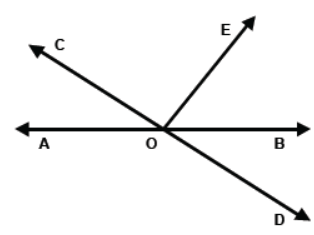
Question. In fig. AB and CD intersect each other at O. If ∠AOC + ∠BOE = 700 and ∠BOD = 400 then the value of ∠COE is
(a) 2500
(b) 700
(c) 300
(d) 500
Question. In fig, if AB || CD, CD || EF and y : z = 3 : 7 then value of x is: 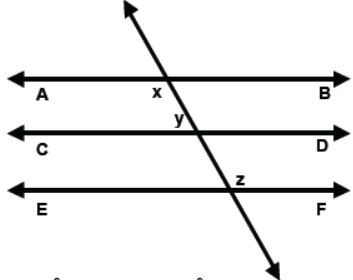
(a) 1260
(b) 1200
(c) 580
(d) 620
Question. In fig, if AB || CD, EF ⊥ CD and ∠GED = 1260 then the value of ∠AGE is 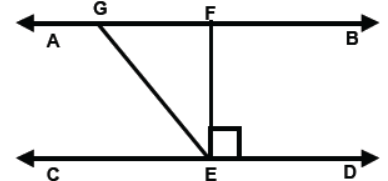
(a) 1260
(b) 1200
(c) 1280
(d) 540
Question. In fig, if PQ || ST, ∠PQR = 1100 and ∠RST = 1300 then the value of ∠QRS is 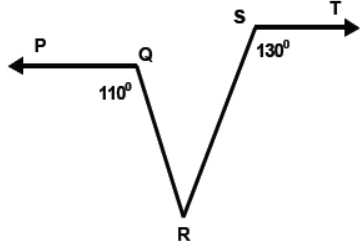
(a) 600
(b) 1200
(c) 800
(d) 900
Question. In fig., AB || CD, ∠APQ = 500, ∠PRD = 1270, then the value of x and y respectively are 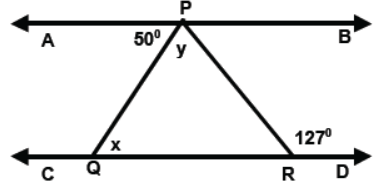
(a) 500 and 770
(b) 400 and 850
(c) 600 and 900
(d) 850 and 750
Question. In fig, AB || CD, the value of x is: 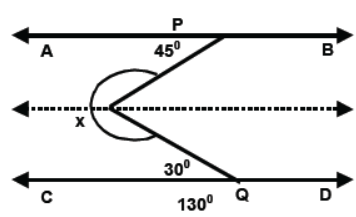
(a) 1850
(b) 2800
(c) 2850
(d) 1950
Question. In fig, if ∠AOC, ∠COD are equal and ∠BOD is a right angle, then the values of ∠AOC and ∠COD are: 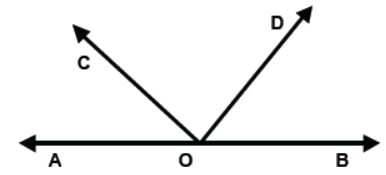
(a) 600
(b) 300
(c) 450
(d) 900
Question. In fig, the sum of ∠a and ∠b is: 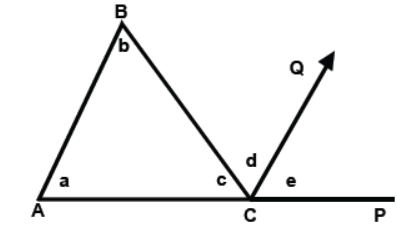
(a) ∠c + ∠d
(b) ∠d + ∠e
(c) ∠b + ∠c
(d) ∠a + ∠c
Question. In triangle interior opposite angle is always less than:
(a) any angle of the triangle
(b) opposite angle
(c) right angle
(d) exterior angle
Question. In a triangle sum of two interior opposite angles is always equal to:
(a) third angle
(b) opposite angle
(c) right angle
(d) none of these
Question. In a triangle exterior angle is always greater than:
(a) third angle
(b) interior opposite angles
(c) right angle
(d) none of these
Question: What is the common between the three angles of a triangle and a linear pair
(a) angles are equal
(b) in both cases sum of angle is 180°.
(c) In triangle there are three angles and in linear pair there are two angles
(d) none of these.
Question: In the given below left figure, the bisectors of
(a) 30°
(b) 20°
(c) 40°
(d) 50°
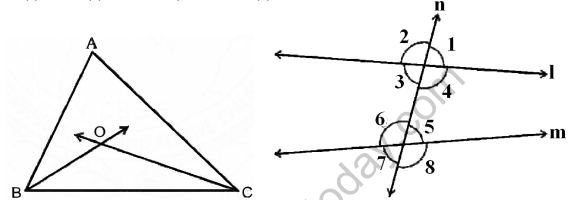
Question: In the given above right sided figure, <2 and <8 are known as
(a) exterior angles
(b) exterior angles on the same side of transversal.
(c) alternate angles
(d) alternate exterior angles.
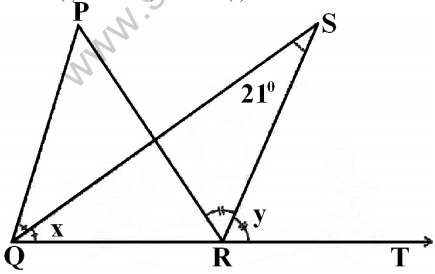
Question: In the given figure, measure of
(a) 10.5°
(b) 42°
(c) 111°
(d) 50°
Question: An angle is 200 more than three times the given angle. If the two angles are supplementary the angles are
(a) 20° and 160°
(b) 40° and 140°
(c) 60° and 120°
(d) 70° and 110°
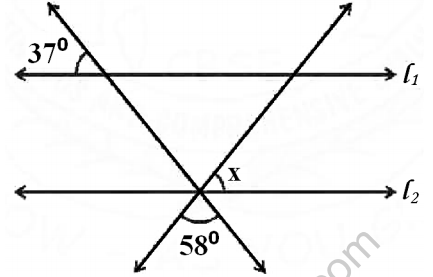
Question: In figure, if l1 || l2, what is the value of x
(a) 90°
(b) 85°
(c) 75°
(d) 70°
Question: If a wheel has six spokes equally spaced, then the measure of the angle between two adjacent spokes is
(a) 90°
(b) 30°
(c) 60°
(d) 180°
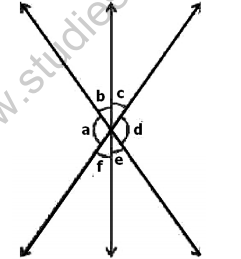
Question: In figure, which of the following statements must be true?
(i) a + b = d + c (ii) a + c + e = 180° (iii) b + f = c + e
(a) (i) only
(b) (ii) only
(c) (iii) only
(d) (ii) and (iii) both
Question: The angle which is two times its complement is
(a) 60°
(b) 30°
(c) 45°
(d) 72°
Question: The angle which is two times its supplement is
(a) 150°
(b) 60°
(c) 90°
(d) 120°
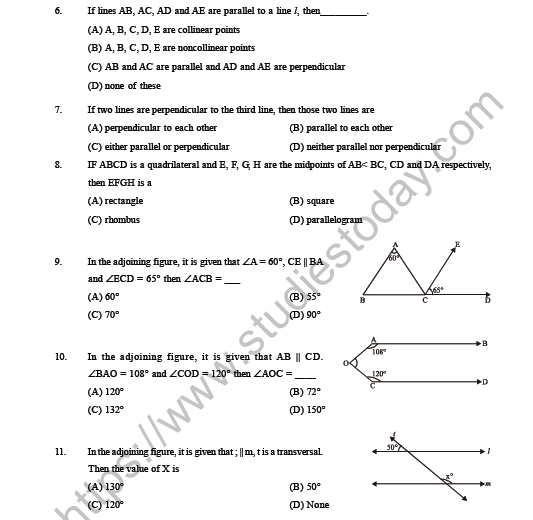
Question: If lines AB, AC, AD and AE are parallel to a line l, then_________.
a) A, B, C, D, E are collinear points
b) A, B, C, D, E are noncollinear points
c) AB and AC are parallel and AD and AE are perpendicular
Answer: A, B, C, D, E are collinear points
Question: If two lines are perpendicular to the third line, then those two lines are
b) neither parallel nor perpendicular
c) perpendicular to each other
d) either parallel or perpendicular
Answer: parallel to each other
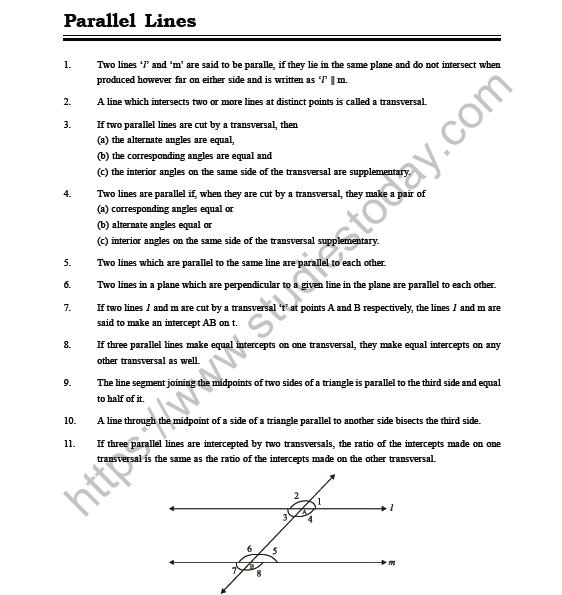
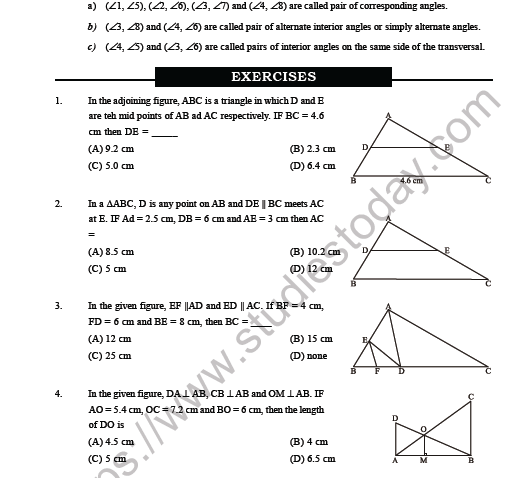
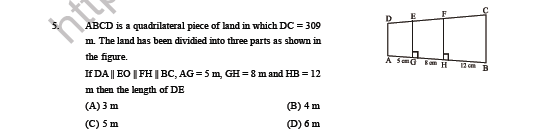


Attempt Mock Tests on this topic
Free study material for Mathematics
Download Chapter MCQs: Class 9 Mathematics Chapter 06 Lines and Angles
About Chapter 06 Lines and Angles MCQs for Class 9 Mathematics
Review structured objective questions for Class 9 Mathematics Chapter 06 Lines and Angles. Built according to official CBSE guidelines, these MCQ sets support daily revision and core concept reinforcement.
How to Verify Your MCQ Answers
Each question includes structured solution keys mapped directly to standard CBSE textbooks, helping students evaluate their reasoning and correct mistakes early in their revision.
Enhance Speed with Online MCQ Tests
Explore our broader library of printable assignments, chapter notes, and mock tests designed to support continuous revision and secure higher marks in CBSE assessments.
FAQs
You can get most exhaustive CBSE Class 9 Maths Lines and Angles MCQs for free on StudiesToday.com. These MCQs for Class 9 Mathematics are updated for the 2026-27 academic session as per CBSE examination standards.
Yes, our CBSE Class 9 Maths Lines and Angles MCQs include the latest type of questions, such as Assertion-Reasoning and Case-based MCQs. 50% of the CBSE paper is now competency-based.
By solving our CBSE Class 9 Maths Lines and Angles MCQs, Class 9 students can improve their accuracy and speed which is important as objective questions provide a chance to secure 100% marks in the Mathematics.
Yes, Mathematics MCQs for Class 9 have answer key and brief explanations to help students understand logic behind the correct option as its important for 2026 competency-focused CBSE exams.
Yes, you can also access online interactive tests for CBSE Class 9 Maths Lines and Angles MCQs on StudiesToday.com as they provide instant answers and score to help you track your progress in Mathematics.