

Download Class 5 Environmental Studies Practice Worksheets
Review targeted academic worksheets with the CBSE Class 5 EVS Every Drop Counts Worksheet. Built according to official educational standards for the 2026-27 term, these downloadable Class 5 Environmental Studies resources support effective daily practice and detailed self-evaluation for Chapter 06 Every Drop Counts.
Access Chapter 06 Every Drop Counts Practice Papers and Solutions
Navigate directly to the solved Environmental Studies worksheets using the digital viewer below. Each practice set includes detailed step-by-step solutions, allowing students to instantly cross-check their work and identify areas requiring further revision.
Question. Which of these may cause serious water pollution?
a. rotting forest waste
b. insects that live in water
c. oil spills from ships
d. large meat-eating fish
Answer : C
Question. Identify the structure marked P in the figure.
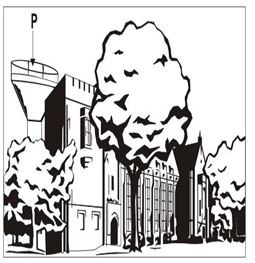
a. Revolving Restaurant
b. Office Complex
c. Water Tank
d. Police Watch Point
Answer : C
Question. In the water cycle, water MOSTLY changes from___________________.
a. Solid to Gas to Solid
b. Liquid to Gas to Liquid
c. Liquid to Gas to Solid
d. Liquid to Solid to Gas
Answer : B
Question. Which graph correctly shows the above data? The table below gives the rainfall in Kolkata from August 4, 2004 to August 11, 2004. Study it and answer the question.
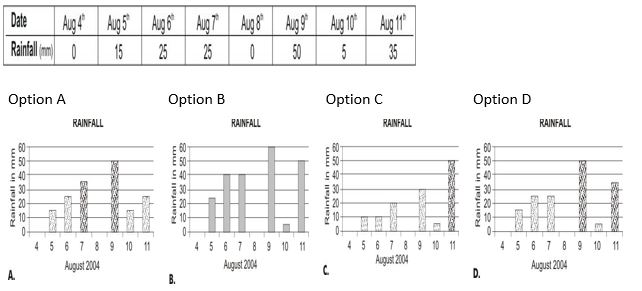
Answer : D
Question. If the total rainfall from June 1 to August 6, 2004 was 490 mm, what will be the total rainfall from June 1 to August 11, 2004? The table below gives the rainfall in Kolkata from August 4, 2004 to August 11,2004. Study it and answer the question.

a. 115 mm
b. 605 mm
c. 630mm
d. We cannot tell
Answer : B
Question. The picture of a lake in Tibet is shown here. It has been taken from……
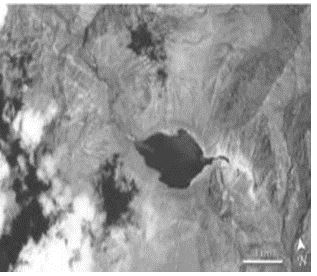
a. the edge of the lake.
b. a nearby building.
c. a satellite.
d. the top of a tree.
Answer : C
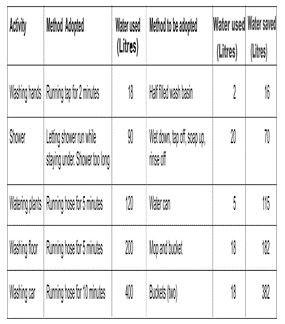
Question. The table gives the water wasted for each activity. Use the information in this table and answer the question given below :
If a family has four members, who wash their hands thrice every day and shower once every day, what will be the total saving of water in a day if the new methods are adopted for each of these activities?
a. 86 litres
b. 328 litres
c. 472 litres
d. 512 litres
Answer : C
Question. The picture here shows the water-cycle. What is the main difference between the water in P and Q?
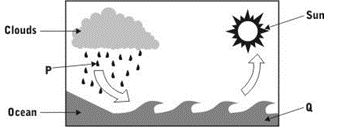
a. P - Water is in liquid form; Q - Water is in vapour form.
b. P - Water is in vapour form; Q - Water is in liquid form.
c. P - Water is salty to taste; Q - Water is not salty to taste.
d. P - Water is not salty to taste; Q - Water is salty to taste.
Answer : D
Question. In the word Ghadsisar, what does the word Sar means.
a. river
b. well
c. lake
d. pond
Answer : c. lake
2. Johads were made to collect _____ .
a. Tap water
b. Well water
c. Rain water
d. Flood Water
Answer : c. Rain water
3. The arrangements of water for travellers was called ___________.
a. sar
b. banvdis
c. piau
d. talabs
Answer : c. piau
Question. Fill in the blanks:
1. Huge rocks were piled up and joint with iron rods to build -----.
2. The step well in Rajasthan where rainwater is collected-----.
3. Around -----------years ago Ghadisar was made.
Answer : 1. Chabutras 2. Bavdis 3. 650 years
Question. State whether true or false
1. The talabs are constructed to collect rain water ________.
2. Jal Board looks after the supply of electricity_________.
Answer : 1.True 2 .False
Question. Answer in one word:
1. Which group rebuild the old lakes and Johads in Rajasthan?
2. Name the foreign traveller who wrote about the dynamic construction of ponds in India.
Answer : 1. Tarun Bharat Sangh 2. Al Baruni
Question. Categorie the names given below.
Gangotri, Yamunotri, Ganga, Yamuna, Sun, Mines, Dal, Sukhna, Jhelum, Coal, Rainfall, Ghadsisar, Chinab
Question. In your class conduct a group discussion on “Future of water” and write your points of discussion. Water 100 km. ahead, water management, car washing, digging lakes, Toilet without water, storage of water, tree plantation
Question. You are given a bucket full of water (25 liters) and asked to survive on it for 1 day. Mention how will you use water carefully to perform your day’s routine?
1)_______________________________________________________________________________________
2)_______________________________________________________________________________________
3)_______________________________________________________________________________________
4)_______________________________________________________________________________________
5)_______________________________________________________________________________________
Free study material for Environmental Studies
Chapter 06 Every Drop Counts Printable Worksheets and Exercises for Class 5 Environmental Studies
Mastering Chapter 06 Every Drop Counts with Printable Worksheets
Access structured practice worksheets for Chapter 06 Every Drop Counts aligned with the 2026 CBSE curriculum. These downloadable exercises for Class 5 Environmental Studies help students build accuracy and reinforce core concepts for upcoming school tests.
Verified Solutions and NCERT Alignment
Each worksheet draws directly from authorized standard textbooks to maintain academic accuracy. Evaluating your finished exercises against expert-verified solutions helps master the formal presentation standards expected in school evaluations.
Additional Study Resources for Class 5 Environmental Studies
Wrap up your chapter revision by testing your knowledge against standard objective question formats. Explore our full library of free, up-to-date printable assignments to maximize your academic results in upcoming CBSE evaluations.
FAQs
You can download the latest chapter-wise printable worksheets for Class 5 Environmental Studies Chapter 06 Every Drop Counts for free from StudiesToday.com. These have been made as per the latest CBSE curriculum for this academic year.
Yes, Class 5 Environmental Studies worksheets for Chapter 06 Every Drop Counts focus on activity-based learning and also competency-style questions. This helps students to apply theoretical knowledge to practical scenarios.
Yes, we have provided solved worksheets for Class 5 Environmental Studies Chapter 06 Every Drop Counts to help students verify their answers instantly.
Yes, our Class 5 Environmental Studies test sheets are mobile-friendly PDFs and can be printed by teachers for classroom.
For Chapter 06 Every Drop Counts, regular practice with our worksheets will improve question-handling speed and help students understand all technical terms and diagrams.