

ICSE Solutions Voyage Class 7 Geography Chapter 13 Europe Climate Natural Vegetation Wildlife Forest Minerals Power Resources have been provided below and is also available in Pdf for free download. The Voyage ICSE solutions for Class 7 Geography have been prepared as per the latest syllabus and ICSE books and examination pattern suggested in Class 7. Questions given in ICSE Voyage book for Class 7 Geography are an important part of exams for Class 7 Geography and if answered properly can help you to get higher marks. Refer to more Chapter-wise answers for ICSE Class 7 Geography and also download more latest study material for all subjects. Chapter 13 Europe Climate Natural Vegetation Wildlife Forest Minerals Power Resources is an important topic in Class 7, please refer to answers provided below to help you score better in exams
Voyage Chapter 13 Europe Climate Natural Vegetation Wildlife Forest Minerals Power Resources Class 7 Geography ICSE Solutions
Class 7 Geography students should refer to the following ICSE questions with answers for Chapter 13 Europe Climate Natural Vegetation Wildlife Forest Minerals Power Resources in Class 7. These ICSE Solutions with answers for Class 7 Geography will come in exams and help you to score good marks
Chapter 13 Europe Climate Natural Vegetation Wildlife Forest Minerals Power Resources Voyage ICSE Solutions Class 7 Geography
Question. Why is London at 51°N not so cold in winter as New York at 41°N ?
Answer: During winter, winds blowing from the southwest bring warmth to London. The Gulf Stream also carries warm water from the Caribbean to keep it mild, whereas New York experiences a colder continental winter.
In simple words: London stays warmer because of warm winds and ocean currents. New York is colder because it has a typical land-based winter.
Exam Tip: Remember to mention both the southwest winds and the Gulf Stream when explaining London's mild winter temperatures.
Discuss
Question. Discuss the importance of ocean currents and winds for the climate of Europe.
Answer:
Ocean currents: Western parts of Europe stay warm thanks to the North Atlantic Drift. This current keeps the ports free of ice so trade can continue throughout the winter.
Winds: The South-Westerly winds travel over the warm ocean waters. They absorb moisture and bring rain, which reduces as you move east. These winds also make winter warmer in coastal and central European areas.
In simple words: Warm ocean currents and winds keep western Europe mild and wet. This also helps ports stay open during winter.
Exam Tip: Clearly separate your answer into ocean currents and winds. Be sure to name the North Atlantic Drift and the South-Westerlies.
Values and Life Skills
Question. Several factors affect the climate of a place. Similarly, several factors affect the personality and nature of human beings. Can you name a few factors that affect the nature and personality of people ? Do you think people can remain unaffected by their surroundings ?
Answer:
(a) The elements that shape a person's character and personality include:
1. Our surroundings
2. Genes or heredity
3. Cultural background
4. Personal life experiences
(b) No, individuals are always influenced by their environment. People tend to adapt their behaviour and character to fit their surroundings.
In simple words: Many things like where we live, our families, and our experiences shape who we are. We are always changing based on our surroundings.
Exam Tip: In value-based questions, make sure to address both parts clearly and relate human behavior directly to their environment.
Exercises
A. Write true or false. Correct the false statements.
Question 1. Eastern Europe receives rainfall throughout the year.
Answer: False. It is Western Europe that gets rain all through the year.
In simple words: This is false. Western Europe receives rainfall throughout the entire year.
Exam Tip: Remember that western parts of Europe are closer to the ocean, so they get regular rain.
Question 2. Softwood trees such as pine, fir, and spruce are found in the taiga belt.
Answer: True. These softwood trees grow abundantly in the taiga forest region.
In simple words: This is true. These evergreen trees are found in the cold taiga belt.
Exam Tip: Keep in mind that pine, fir, and spruce are typical examples of softwood trees.
Question 3. Mixed forests consist of grass, moss, softwood trees, hardwood trees, and thorny vegetation.
Answer: False. Mixed forests are made up of both hardwood and softwood trees.
In simple words: This is false. Mixed forests only contain a blend of broad-leaved hardwood trees and needle-leaved softwood trees.
Exam Tip: Mosses belong to the tundra, while thorny plants belong to deserts, not mixed forests.
Question 4. Only mosses, lichens, and small colourful flowers grow in the steppes of Eurasia.
Answer: False. These plants actually grow in the Tundra region.
In simple words: This is false. Mosses and lichens grow in the freezing Tundra, not the steppes.
Exam Tip: Remember that steppes are grasslands, while the tundra has very short, simple plants due to extreme cold.
Question 5. Wild cats and large fur-bearing animals are not found anywhere in Europe.
Answer: False. These animals can be found in the Tundra and other cold regions of Europe.
In simple words: This is false. Wild cats and furry animals do live in Europe's colder areas.
Exam Tip: Fur-bearing animals need thick coats to survive in northern Europe's snowy regions.
Question. A list of names of wildlife and vegetation species has been provided. Write them in the appropriate columns given below. pine, oak, lynx, lichen, myrtle, olive, squirrel, seal, moss, spruce, beech, laurel, penguin, short grass
Answer:
| Climatic regions | Wildlife | Vegetation |
|---|---|---|
| Arctic and sub-Arctic | Penguin, Seal, squirrel, Lynx | Moss, Lichen, Beech, spruce |
| Maritime climate or west European climate | - | Oak, Beech, Pine |
| Central European climate or temperate interior | - | Short grass |
| Eastern European or continental climate | - | Short grass |
| Mediterranean climate | Squirrel | Olive, Myrtle and Laurel |
| Desert climate | - | - |
In simple words: This table groups various European plants and animals into the climatic zones where they are typically found.
Exam Tip: Be careful with the classification of specific species, like linking olive and laurel trees to the Mediterranean climate, which is a common exam topic.
C. Choose the correct answer.
Question 1. An ocean current that keeps the coasts of northern Europe frost-free in winter:
(a) Labrador Current
(b) Canary Current
(c) North Atlantic Drift
(d) North Pacific Drift
Answer: (c) North Atlantic Drift
In simple words: The North Atlantic Drift is a warm ocean current. It flows near northern Europe and keeps its ports free from ice during winter.
Exam Tip: Always remember that the North Atlantic Drift plays a major role in keeping Western and Northern Europe relatively warm.
Question 2. A major part of Europe has moderate climate because it is located in:
(a) the torrid zone
(b) the temperate zone
(c) the frigid zone
(d) None of the options
Answer: (b) the temperate zone
In simple words: Most of Europe lies in the temperate zone. This area is neither too hot nor too cold, giving it a mild climate.
Exam Tip: The temperate zone is characterized by moderate temperatures, which is why most of Europe avoids extreme heat or cold.
Question 3. Onshore winds that bring rainfall in winter to the countries around the Mediterranean Sea:
(a) the North-Westerlies
(b) the South-Westerlies
(c) the North Polar Easterlies
(d) the North-East Trade Winds
Answer: (b) the South-Westerlies
In simple words: In winter, the South-Westerly winds blow from the sea towards the land. They bring rain to the areas around the Mediterranean Sea.
Exam Tip: Remember that the Mediterranean region uniquely receives most of its rainfall during the winter season due to these winds.
Question 4. A region of extensive evergreen trees, with needle-like leaves and home to small fur-bearing animals:
(a) tundra
(b) Steppes
(c) Taiga
(d) Desert
Answer: (c) Taiga
In simple words: The Taiga is a huge forest of needle-leaf evergreen trees. Many small animals with thick fur live there because of the cold.
Exam Tip: Taiga is also known as the coniferous forest biome, which is famous for needle-like leaves and fur-bearing wildlife.
Question 5. A region well-known for olives, oleander, and orange trees:
(a) western Europe
(b) northern Europe
(c) eastern Europe
(d) southern Europe
Answer: (d) southern Europe
In simple words: Southern Europe has a Mediterranean climate. This sunny weather is perfect for growing citrus fruits, olives, and colorful shrubs.
Exam Tip: Citrus fruits, olives, and shrubs like oleander are classic features of Southern Europe's Mediterranean vegetation.
D. Answer the following questions in brief.
Question 1. How does the climate of Europe change from:
(a) east to west
(b) north to south
Answer:
(a) east to west - Seasonal temperatures are more extreme in the east compared to the west. Western areas get the most rainfall, which gradually decreases as you go east.
(b) north to south - Countries in northern Europe have longer, colder winters and shorter, cooler summers compared to those in southern Europe.
In simple words: Moving from west to east, the weather gets drier and more extreme. Moving from south to north, winters become much longer and colder.
Exam Tip: Be sure to discuss both rainfall and temperature changes when explaining these climate variations.
Question 2. List the factors that affect the climate of Europe.
Answer:
Factors Affecting the Climate of Europe:
Latitude - Most of Europe is in the temperate zone, which has mild temperatures. Only a tiny northern portion reaches into the freezing Arctic region.
Nearness to Water Bodies - Almost all of Europe, except the eastern part, is close to water. Oceans and seas help keep the climate pleasant and moderate.
Relief Features - Mountains like the Alps run from east to west. This allows wet winds to blow deep inland and bring rain to the central parts.
Ocean Currents - The warm North Atlantic Drift warms up western Europe. It keeps the ports free from freezing even during winter.
Winds - South-Westerly winds get warm as they cross the ocean. They carry moisture and bring rainfall, which decreases as they go east. They also warm up the coastal and central areas.
In simple words: Europe's climate is shaped by its mild location, nearby seas, mountain directions, warm ocean currents, and wet winds.
Exam Tip: Memorize the five key headings: Latitude, Nearness to Water, Relief, Ocean Currents, and Winds, as they are crucial for full marks.
Question 3. How is the vegetation of the Mediaterranean region able to withstand the summer drought conditions ?
Answer: Mediterranean Vegetation: The plants here include trees with thick, spongy bark and deep roots. They also have shrubs with tiny, waxy leaves and thorns. These special features, like deep roots, waxy leaves, and thick bark, help the plants store water and survive hot, dry summers.
In simple words: Plants in this region have thick bark, deep roots, and waxy leaves. These features help them save water and live through dry summers.
Exam Tip: Be sure to mention specific adaptations like "long roots", "waxy leaves", and "thick spongy bark" as key points.
Question 4. What changes have human beings brought about in the temperate grasslands of Europe ?
Answer: Humans have cleared vast areas of natural vegetation in these grasslands to grow crops like wheat and other grains. This widespread land development has also pushed wildlife away from populated regions and altered the overall environment.
In simple words: People cut down many trees and wild plants to grow wheat. This development forced wild animals to leave their homes.
Exam Tip: Focus on how farming (specifically wheat and cereal cultivation) and urbanization have replaced natural grasslands and impacted local wildlife.
Question 5. Name a few minerals found in large quantities in Europe.
Answer: Europe contains rich reserves of various minerals, including iron ore, coal, petroleum, and natural gas. Additionally, there are significant amounts of bauxite, zinc, copper, lead, nickel, and manganese.
In simple words: Europe has plenty of useful minerals like coal, iron, oil, gas, copper, and zinc in the ground.
Exam Tip: Remembering at least four to five major minerals like coal, iron ore, petroleum, and bauxite will ensure full marks.
E. Answer the following questions in one or two paragraphs.
Question 1. Explain how relief features, winds, and ocean currents affect the climate of Europe.
Answer:
Several key elements shape Europe's climatic conditions:
Latitude - A major portion of the continent resides within temperate zones, keeping temperatures mild. Only a tiny slice in the far north is located in the cold frigid zone.
Nearness to Water Bodies - With the exception of the far east, most areas are surrounded by water. Seas and oceans have a strong cooling and warming balance on the climate.
Relief Features - Mountain ranges like the Alps are spread out east-to-west, which lets moisture-filled winds flow freely into the interior to produce rainfall.
Ocean Currents - The North Atlantic Drift is a warm current that prevents coastal waters from freezing, allowing western European ports to remain active all winter.
Winds - Wet South-Westerlies blow across the warm currents and absorb moisture. As they move inland, they bring rain that tapers off towards the east, while raising temperatures along the coast.
In simple words: Mountains, oceans, warm currents, and winds work together to keep Europe's weather mild, wet, and safe from extreme winter freezing.
Exam Tip: Even if the question asks only for three factors, the textbook solution includes all five, so write down all of them to get full marks.
Question 2. What is the difference between maritime and continental climates ?
Answer:
Continental climate:
This climate is found in inland regions like Poland, eastern Finland, Russia, Slovakia, the Czech Republic, and the Baltic states. It is marked by very hot summers, extremely cold winters, and light rainfall during the summer months.
Maritime climate:
This climate is felt in coastal areas near the Atlantic Ocean. Because these places are close to the sea, they have mild summers, cool winters, and receive rainfall all through the year.
In simple words: Continental climate has extreme hot and cold seasons with little rain. Maritime climate has mild temperatures and rain throughout the year because of the ocean.
Exam Tip: Emphasize that distance from the sea is the main reason for the difference between extreme continental and mild maritime climates.
Question 3. With the help of two examples from Europe, show how the vegetation of Europe is closely related to climate.
Answer: Europe's diverse climate directly determines its plant life. Two clear examples show this relationship:
1. In the extremely cold Arctic and Sub-Arctic climates of northern Europe, only simple plants like mosses and lichens can grow, forming the Tundra vegetation.
2. In the Mediterranean climate of southern Europe, which has hot, dry summers and mild, wet winters, plants like olive and myrtle trees grow. They have thick bark and waxy leaves to survive summer droughts.
In simple words: Plants grow where they can survive the weather. Mosses grow in the freezing north, while olive trees with thick bark grow in the dry, sunny south.
Exam Tip: Always use clear examples, like Tundra vegetation for cold climates and Mediterranean trees for dry summer climates, to illustrate the link.
Question 4. What do the terms ‘tundra’, ‘taiga’, and ‘steppes’ refer to ? Explain each of the terms and state where each is found.
Answer:
Tundra: This is a huge, flat, and treeless northern region where the ground stays frozen all year. It is located in the far northern parts of Europe, Asia, and North America.
Taiga: This is the world's largest land-based biome, characterized by coniferous forests. It stretches in a wide belt across Europe, Asia, and North America, sitting just south of the tundra.
Steppes: This refers to large, flat plains of grassland without trees. They are found in southeastern parts of Europe and across Siberia.
In simple words: Tundra is frozen, treeless land in the far north. Taiga is the massive evergreen forest just below it. Steppes are flat, grassy plains without trees.
Exam Tip: Be sure to define both what each ecosystem is and exactly where it is located geographically.
Question 5. How has the wildlife of the tundra adapted to the climate?
Answer: Tundra animals, particularly reindeer, are extremely well-suited to the harsh cold. They have thick coats of fur for warmth. Their wide, flat hooves help them walk easily over deep snow and dig through it to find buried plants to eat.
In simple words: Animals like reindeer have thick fur to stay warm. They also have wide hooves to walk on snow and dig for food.
Exam Tip: Focus on physical adaptations like thick coats and specialized hooves when explaining how animals survive in extreme cold.
Question 6. Why has the area under forest in Europe dropped from 80 per cent to 30 per cent in recent years ?
Answer: The percentage of forest cover in Europe decreased significantly because trees were cleared to open up land for farming and factories to support a growing population. Nowadays, major forests remain in only three key areas - the Scandinavian mountains, the Alps, and the Russian taiga. Some mixed and Mediterranean forests can also be found in the south.
In simple words: Many forests were cut down to make room for farms, towns, and factories. Now, large forests are mostly left in the mountains and in Russia.
Exam Tip: Mention the high population density of Europe as the main driver for clearing forests for agriculture and industrialization.
F. Map work.
Question. On the blank outline map of europe do as directed.
1. Use different colours to show the various climatic regions of Europe.
2. Mark the areas that have (i) Steppes and (ii) Mediterranean forests.
Answer:
1. Refer to the climate map of Europe in your textbook.
2. Refer to the vegetation map of Europe in your textbook.
In simple words: Look at your geography book to see the colorful maps showing the different weather zones and forest areas of Europe.
Exam Tip: Practice locating the Mediterranean coast and the Russian grasslands (steppes) on a blank map, as these are common map-pointing questions.
G. Picture study.
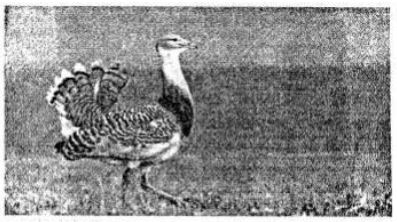
Question 1. In which vegetation belt is this bird mostly found?
Answer: This bird is primarily found in the temperate grasslands or steppes.
In simple words: The Great Bustard lives in flat, open grasslands.
Exam Tip: The Great Bustard is a characteristic bird of the temperate grasslands (steppes) region.
Question 2. Name two other animals from this vegetation belt.
Answer: Two other animals living in this region are the roe deer and the saiga antelope.
In simple words: The roe deer and the saiga antelope also live in these grasslands.
Exam Tip: Keep these animal names in mind as standard examples of temperate grassland (steppes) fauna.
Let’s Do Something
Question. Collect pictures and information on the natural vegetation and wildlife of Europe from encyclopaedias and the Internet, and make a scrapbook.
Answer: This is a practical activity to be done individually by the students.
In simple words: Find pictures of European plants and animals online or in old books and paste them into a scrapbook.
Exam Tip: Creating a scrapbook is a great way to visually remember the different biomes and wildlife of Europe.
Free study material for Geography
ICSE Voyage Solutions Class 7 Geography Chapter 13 Europe Climate Natural Vegetation Wildlife Forest Minerals Power Resources
Students can now access the detailed Voyage Solutions for Chapter 13 Europe Climate Natural Vegetation Wildlife Forest Minerals Power Resources on our portal. These solutions have been carefully prepared as per latest ICSE Class 7 syllabus. Each solution given above has been updated based on the current year pattern to ensure Class 7 students have the most updated Geography content.
Master Voyage Textbook Questions
Our subject experts have provided detailed explanations for all the questions found in the Voyage textbook for Class 7 Geography. We have focussed on making the concepts easy for you in Chapter 13 Europe Climate Natural Vegetation Wildlife Forest Minerals Power Resources so that students can understand the concepts behind every answer. For all numerical problems and theoretical concepts these solutions will help in strengthening your analytical skill required for the ICSE examinations.
Complete Geography Exam Preparation
By using these Voyage Class 7 solutions, you can enhance your learning and identify areas that need more attention. We recommend solving the Geography Questions from the textbook first and then use our teacher-verified answers. For a proper revision of Chapter 13 Europe Climate Natural Vegetation Wildlife Forest Minerals Power Resources, students should also also check our Revision Notes and Sample Papers available on studiestoday.com.
FAQs
You can download the verified Voyage solutions for Chapter 13 Europe Climate Natural Vegetation Wildlife Forest Minerals Power Resources on StudiesToday.com. Our teachers have prepared answers for Class 7 Geography as per 2026-27 ICSE academic session.
Yes, our solutions for Chapter 13 Europe Climate Natural Vegetation Wildlife Forest Minerals Power Resources are designed as per new 2026 ICSE standards. 40% competency-based questions required for Class 7, are included to help students understand application-based logic behind every Geography answer.
Yes, every exercise in Chapter 13 Europe Climate Natural Vegetation Wildlife Forest Minerals Power Resources from the Voyage textbook has been solved step-by-step. Class 7 students will learn Geography conceots before their ICSE exams.
Yes, follow structured format of these Voyage solutions for Chapter 13 Europe Climate Natural Vegetation Wildlife Forest Minerals Power Resources to get full 20% internal assessment marks and use Class 7 Geography projects and viva preparation as per ICSE 2026 guidelines.