

ICSE Solutions Selina Concise Class 7 History Civics Chapter 3 The Turkish Invaders have been provided below and is also available in Pdf for free download. The Selina Concise ICSE solutions for Class 7 History Civics have been prepared as per the latest syllabus and ICSE books and examination pattern suggested in Class 7. Questions given in ICSE Selina Concise book for Class 7 History Civics are an important part of exams for Class 7 History Civics and if answered properly can help you to get higher marks. Refer to more Chapter-wise answers for ICSE Class 7 History Civics and also download more latest study material for all subjects. Chapter 3 The Turkish Invaders is an important topic in Class 7, please refer to answers provided below to help you score better in exams
Selina Concise Chapter 3 The Turkish Invaders Class 7 History Civics ICSE Solutions
Class 7 History Civics students should refer to the following ICSE questions with answers for Chapter 3 The Turkish Invaders in Class 7. These ICSE Solutions with answers for Class 7 History Civics will come in exams and help you to score good marks
Chapter 3 The Turkish Invaders Selina Concise ICSE Solutions Class 7 History Civics
Important Words
- The Turks set up two key states called Ghazni and Ghor.
- Sultans were the kings who ruled the Delhi Sultanate from their main city, Delhi.
- A Persian poet named Firdausi wrote Shahnama. This book tells the life story of Sultan Mahmud of Ghazni.
- Lakhbaksh means someone who gives away lakhs of rupees. People called Qutbuddin Aibak by this name because he was very kind and giving.
- A muezzin is a person who calls Muslims to pray, often standing on a tall mosque tower.
- The empire was split into areas called Iqtas. Each area was run by a special officer.
- Divine kingship is the belief that a king acts as God's agent on earth.
Time To Learn
I. Fill in the blanks:
Question 1. Mahmud Ghazni invaded India to _________ times its wealth.
Answer: 17 times
In simple words: Mahmud Ghazni came to India seventeen times to take away its riches.
Exam Tip: Remember the exact number 17, as this is a very common question about Mahmud Ghazni's raids.
Question 2. Muhammad Ghori defeated _________ in the second battle of Tarain.
Answer: Prithviraj
In simple words: Muhammad Ghori won against Prithviraj Chauhan in their second big fight at Tarain.
Exam Tip: Spelling is key. Be sure to spell 'Prithviraj' correctly to get full marks.
Question 3. _________, spent 10 years in India and wrote a book _________.
Answer: Alberuni, Kitab-ul-Hind
In simple words: A scholar named Alberuni stayed in India for ten years and wrote a book about it called Kitab-ul-Hind.
Exam Tip: This question has two blanks. Make sure you write both answers in the correct order.
Question 4. Firdausi wrote a famous epic named _________.
Answer: Shahnama
In simple words: The poet Firdausi wrote a very long and famous poem called Shahnama.
Exam Tip: Shahnama is the biography of Mahmud of Ghazni, written by the poet Firdausi.
Question 5. Mahmud Ghazni plundered _________ in 1025 AD
Answer: Somnath temple
In simple words: Mahmud Ghazni looted the rich Somnath temple in the year 1025 AD.
Exam Tip: Memorize the year 1025 AD along with the name of the Somnath temple.
II. Match Column A with Column B:
Question 1. Match the following dates with the correct events:
| Column A | Column B |
|---|---|
| 1. AD 1025 | (a) First battle of Tarain. |
| 2. AD 1192 | (b) Muhammad Ghori defeated Prithviraj Chauhan at Tarain. |
| 3. AD 1194 | (c) Mahmud of Ghazni attacked and destroyed the Hindu temple at Somnath. |
| 4. AD 1191 | (d) Muhammad Ghori defeated and killed Jaichand of Kanauj. |
Answer:
| Column A | Column B |
|---|---|
| 1. AD 1025 | (c) Mahmud of Ghazni attacked and destroyed the Hindu temple at Somnath. |
| 2. AD 1192 | (b) Muhammad Ghori defeated Prithviraj Chauhan at Tarain. |
| 3. AD 1194 | (d) Muhammad Ghori defeated and killed Jaichand of Kanauj. |
| 4. AD 1191 | (a) First battle of Tarain. |
In simple words: These dates show when important battles and temple raids happened in Indian history.
Exam Tip: To avoid confusion, remember that the First Battle of Tarain happened in 1191, and the Second Battle happened just one year later in 1192.
III. State whether the following statements are True or False:
Question 1. Muhammad Ghori established the Muslim rule in India.
Answer: True
In simple words: This statement is correct. Muhammad Ghori's wins set up Muslim rule in India.
Exam Tip: Remember that Ghori is considered the actual founder of Muslim rule in India, unlike Mahmud of Ghazni who only came to raid.
Question 2. Mahmud was interested in setting up an empire in India.
Answer: False. Mahmud wanted to gain riches rather than build a kingdom in India.
In simple words: This is incorrect. Mahmud came to India to take gold and wealth, not to rule the land.
Exam Tip: If a statement is false, always write the correct reason to secure full marks in exams.
Question 3. The Rajputs united to face the Turks or Muslims but failed.
Answer: False. The Rajput rulers did not unite and fought among themselves.
In simple words: This is not true because the Rajput kings were divided and did not work together.
Exam Tip: Lack of unity among Rajputs was the primary reason for their defeat against the Turks.
Question 4. Jaichand defeated Muhammad Ghori.
Answer: False. Jaichand was beaten by Muhammad Ghori.
In simple words: This statement is false because Ghori was the one who defeated Jaichand.
Exam Tip: Keep the names of the victors and losers clear in your mind for all medieval battles.
Question 5. Firdausi wrote Kitab-ul-Hind.
Answer: False. The book Kitab-ul-Hind was written by Alberuni.
In simple words: This is incorrect because Alberuni wrote this book, not Firdausi.
Exam Tip: Do not confuse Firdausi (who wrote Shahnama) with Alberuni (who wrote Kitab-ul-Hind).
IV. Answer the following questions briefly:
Question 1. Mention three most important invasions of Mahmud of Ghazni.
Answer:
1. Mahmud of Ghazni made his first raid on India in 1000 AD. Over his lifetime, he attacked India seventeen times. He beat King Jaipal and his son Anandpal who tried to stop him.
2. From 1009 AD to 1026 AD, he targeted many different areas. These included cities like Delhi, Mathura, Kanauj, and regions like Punjab and Bengal.
3. His largest raid was in 1027 AD on the famous Somnath temple in Gujarat. He took all the gold and valuable treasures kept inside this strong temple.
In simple words: Mahmud of Ghazni raided India seventeen times. His first raid was in 1000 AD, followed by attacks on many northern cities, and his biggest raid was on the Somnath temple in 1027 AD.
Exam Tip: State the dates clearly for each of the three major raids to get maximum marks.
Question 2. When and between whom were the Battles of Tarain fought?
Answer: These two wars took place between Muhammad Ghori and Prithviraj Chauhan. The first clash took place in 1191, where Prithviraj won and Ghori was beaten. The second clash happened in 1192, and this time Ghori won the fight.
In simple words: Two battles were fought at Tarain between Ghori and Prithviraj. Ghori lost the first fight in 1191 but won the second one in 1192.
Exam Tip: Be sure to write the exact years (1191 and 1192) and specify who won each battle.
Question 3. How were the raids of Mahmud Ghazni different from the raids of Muhammad Ghori?
Answer: Sultan Mahmud of Ghazni made seventeen attacks on India over thirty-three years. His main goal was to take back gold and riches to his homeland. He did not want to build a kingdom in India. In contrast, Muhammad Ghori came to India 150 years later to establish his rule. His attacks set up the base for Turkish rule. He fought against strong Rajput kingdoms and took over many areas like Multan, Punjab, and Gujarat. Ghori wanted to create a lasting empire in India.
In simple words: Mahmud came to India only to steal riches and go back. Ghori came to conquer the land and build a kingdom.
Exam Tip: Contrast the two leaders clearly: Mahmud wanted wealth, while Ghori wanted territory and empire.
V. Give Reason why:
Question 1. Mahmud of Ghazni attacked India
Answer: Sultan Mahmud raided India because he wanted to collect its massive wealth. He had no desire to build a kingdom or rule over the Indian lands.
In simple words: Mahmud attacked India because he wanted gold and riches, not to rule the country.
Exam Tip: Use the keyword "wealth" or "riches" as the primary reason for Mahmud's attacks.
Question 2. Turks succeeded against Rajputs
Answer:
1. The Rajput rulers did not have unity. They kept fighting among themselves. For example, Prithviraj Chauhan and Jaichand did not join hands to fight Ghori.
2. The Rajput leaders were often jealous of one another.
3. They did not keep a permanent army. Instead, they had to ask their landlords for soldiers when a war started.
4. The slow Rajput forces could not compete with the very fast horse riders of the Turkish army.
In simple words: The Turks won because the Rajput kings were divided, fought each other, had no permanent army, and could not match the fast Turkish horses.
Exam Tip: Mentioning the lack of a standing army and the superior Turkish cavalry are essential points for this answer.
VI. Guess who it is:
Question 1. wrote a book Kitab-ul-Hind.
Answer: Alberuni
In simple words: Alberuni is the author of this book about India.
Exam Tip: Remember this Persian scholar's name as the author of Kitab-ul-Hind.
Question 2. First Turkish invader to enter India north-west side.
Answer: Mahmud of Ghazni
In simple words: Mahmud of Ghazni was the very first Turkish leader to attack India from the northwest.
Exam Tip: Note that Mahmud of Ghazni was the first Turkish invader, preceding Muhammad Ghori.
Question 3. Beautified his city the most beautiful one, with the wealth gained in India.
Answer: Mahmud of Ghazni
In simple words: Mahmud used the gold he took from India to make his capital city, Ghazni, beautiful.
Exam Tip: Ghazni was decorated using riches plundered from Indian cities and temples.
Question 4. Laid the foundation of Turkish rule in India.
Answer: Muhammad Ghori
In simple words: Muhammad Ghori established Turkish rule in India.
Exam Tip: Unlike Mahmud who only raided, Ghori laid the foundation for the Delhi Sultanate.
Question 5. Invaded India 17 times.
Answer: Mahmud of Ghazni
In simple words: Mahmud of Ghazni raided India seventeen times.
Exam Tip: Associate the number 17 directly with Mahmud of Ghazni's raids.
Additional Questions (The Turkish Invaders)
A. Fill in the blanks:
Question 1. Mahmud of Ghazni invaded India _________ times in the course of _________ years
Answer: seventeen, twenty five
In simple words: Mahmud of Ghazni made seventeen attacks over a period of twenty-five years.
Exam Tip: Memorize both numbers: 17 attacks and a duration of 25 years.
Question 2. Mahmud’s raids exposed the _________ of the northern states and paved the way for the _________ of India.
Answer: weakness, conquest
In simple words: The attacks by Mahmud showed how weak northern India was, making it easier for others to conquer it later.
Exam Tip: Focus on how these early raids showed the divisions and vulnerabilities of Indian rulers.
Question 3. Qutbuddin Aibak took control of Muhammad Ghori’s _________ possessions and laid the foundation of the _________.
Answer: Indian, Delhi Sultanate
In simple words: Qutbuddin Aibak took charge of Ghori's lands in India and started the Delhi Sultanate.
Exam Tip: Qutbuddin Aibak was Ghori's trusted general who became the first Sultan of Delhi.
Question 4. Iltutmish defeated the Rajput rulers of _________ and brought the whole of North India up to the river Narmada under his control.
Answer: Ujjain, Ranthambore, Malwa, and Gwalior
In simple words: Iltutmish beat several Rajput kings and ruled northern India all the way down to the Narmada river.
Exam Tip: Note the geographical limit of Iltutmish's expansion, which went up to the Narmada River.
Question 5. The _________ recognized Iltutmish as the sovereign of India. He was succeeded by _________.
Answer: Caliph of Baghdad, his daughter Razia
In simple words: The Caliph of Baghdad accepted Iltutmish as the ruler of India, and his daughter Razia ruled after him.
Exam Tip: Razia Sultan was the first and only female Muslim ruler of medieval Delhi.
B. Match the following:
Question 1. Match the historical figures and battles with their correct descriptions:
| Column A | Column B |
|---|---|
| 1. Mahmud of Ghazni | (a) general of Ghori |
| 2. First Battle of Tarain | (b) Prithviraj was defeated by Muhammad Ghori. |
| 3. Second Battle of Tarain | (c) Prithviraj defeated Muhammad Ghori |
| 4. Qutbuddin Aibak | (e) viceroy of Ghori |
| 5. Muhammad bin Bakhtiar Khalji | (d) patron of art and learning |
Answer:
| Column A | Column B |
|---|---|
| 1. Mahmud of Ghazni | (d) patron of art and learning |
| 2. First Battle of Tarain | (c) Prithviraj defeated Muhammad Ghori |
| 3. Second Battle of Tarain | (b) Prithviraj was defeated by Muhammad Ghori. |
| 4. Qutbuddin Aibak | (e) viceroy of Ghori |
| 5. Muhammad bin Bakhtiar Khalji | (a) general of Ghori |
In simple words: This table matches key people like rulers and generals with their roles, and battles with their outcomes.
Exam Tip: Carefully distinguish between the two battles of Tarain and the specific generals appointed by Ghori.
C. Choose the correct answer:
Question 1. Mahmud of Ghazni was a _________ ruler.
(a) powerful
(b) weak
(c) inefficient
Answer: (a) powerful
In simple words: Mahmud of Ghazni was a strong and mighty king.
Exam Tip: Mahmud of Ghazni was highly successful in his military campaigns, making him a powerful ruler of his time.
Question 2. Mahmud of Ghazni was interested in territorial expansion in
(a) South Asia
(b) Central Asia
(c) West Asia
Answer: (b) Central Asia
In simple words: Mahmud wanted to expand his kingdom mainly in Central Asia, not in India.
Exam Tip: Remember that Mahmud's expansion plans were focused on Central Asia, while his raids in India were mainly for wealth.
Question 3. Firdausi was a great
(a) mathematician
(b) historian
(c) poet
Answer: (c) poet
In simple words: Firdausi was a famous writer of poetry who wrote the Shahnama.
Exam Tip: Firdausi is remembered as one of Persia's greatest poets, famous for writing the epic poem Shahnama.
Question 4. Nasiruddin Mahmud was a weak and inexperienced ruler, and the affairs of the state were managed by _________ on his behalf.
(a) Balban
(b) Iltutmish
(c) Qutbuddin Aibak
Answer: (a) Balban
In simple words: Since Nasiruddin Mahmud was weak, his minister Balban took care of all the state work.
Exam Tip: Balban's role as a regent helped lay the ground for him to take the throne later as a very powerful sultan.
Question 5. Muhammad Ghori was as great a military leader as Mahmud of Ghazni. (True/False)
Answer: False. Muhammad Ghori was not as great a military leader as Mahmud of Ghazni.
In simple words: This is false because Mahmud of Ghazni was a more skilled military commander than Ghori.
Exam Tip: Note that Mahmud of Ghazni never lost a battle in India, while Ghori faced several defeats.
Question 6. Who never smiled or allowed others to laugh or joke in his court?
(a) Iltutmish
(b) Qutbuddin Aibak
(c) Balban
Answer: (c) Balban
In simple words: Balban maintained a very strict court where no one was allowed to laugh or make jokes.
Exam Tip: Balban was famous for his extremely strict rules and formal behavior in his royal court.
D. State whether the following are true or false
Question 1. The kingdoms of Ghazni and Ghor were established by the Abbasids.
Answer: False. The kingdoms of Ghazni and Ghor were founded by the Turks.
In simple words: This is incorrect because Turkish rulers set up Ghazni and Ghor, not the Abbasids.
Exam Tip: Be sure to write the correct statement if the answer is False.
Question 2. During Mahmud’s time, North India was divided and there was no unity.
Answer: True
In simple words: This is true. The kingdoms in northern India were split up and did not stand together.
Exam Tip: This lack of unity made it easy for invaders like Mahmud to attack and raid Indian cities.
Question 3. Iltutmish failed to crush the power of the governor of Bengal.
Answer: False. Iltutmish successfully broke the power of the governor of Bengal.
In simple words: This statement is false because Iltutmish defeated the rebellious governor of Bengal.
Exam Tip: Iltutmish was highly successful in controlling internal revolts and strengthening the sultanate.
Question 4. Razia Sultan was brave, intelligent and just.
Answer: True. She was indeed a very brave, clever, and fair ruler.
In simple words: This statement is true because Razia had all the qualities of a great leader.
Exam Tip: Razia's capability as a ruler was widely recognized, even though the nobles opposed her because she was a woman.
Question 5. Balban made the monarchy weak and dependent on the nobles.
Answer: False. Balban made the crown absolute and extremely powerful.
In simple words: This is false. Balban actually increased the power of the king and controlled the nobles strictly.
Exam Tip: Balban introduced policies like Sijda and Paibos to establish the supreme authority of the king over the nobles.
Question 6. Sultan Mahmud annexed Punjab to create a gateway to India for future invasions.
Answer: True
In simple words: This is true. Mahmud took over Punjab so he could easily enter India for later attacks.
Exam Tip: Punjab served as a strategic military base for Turkish invasions into northern India.
Question 7. Mahmud of Ghazni was the founder of the Turkish rule in India.
Answer: False. Muhammad Ghori founded Turkish rule in India.
In simple words: This statement is false. Ghori was the one who set up the permanent Turkish empire here.
Exam Tip: Never confuse Mahmud of Ghazni (raider) with Muhammad Ghori (founder of rule).
Question 8. Muhammad Ghori was as great a military leader as Mahmud of Ghazni.
Answer: False. Muhammad Ghori was not as skilled a military general as Mahmud of Ghazni.
In simple words: This is false because Mahmud was more successful in his battles and military strategies.
Exam Tip: Mahmud of Ghazni never faced defeat in India, whereas Muhammad Ghori was defeated in several battles.
E. Answer the following questions in one or two words/ sentences:
Question 1. What happened to the Abbasid Caliphate by the 9th century ce?
Answer: By the close of the ninth century, the powerful Abbasid empire broke apart. It split into several free states ruled by Turkish leaders. These leaders had previously worked as soldiers for the Caliphs.
In simple words: The big Abbasid empire broke into smaller states ruled by Turkish commanders.
Exam Tip: State clearly that the empire broke up into smaller independent Turkish-ruled states.
Question 2. Name the author of the great epic Shahnama.
Answer: The famous Persian poet Firdausi wrote this great epic.
In simple words: The book was written by a Persian poet named Firdausi.
Exam Tip: Firdausi is the correct answer. Remember his name is linked with the book Shahnama.
Question 3. What is the significance of the defeat of Prithviraj in the Second Battle of Tarain?
Answer: Losing this battle ended Rajput power in northern India. Delhi came under the control of Muhammad Ghori. From that time until 1858, Muslim kings sat on Delhi's throne.
In simple words: Prithviraj's defeat ended Rajput rule in Delhi and started centuries of Muslim rule in northern India.
Exam Tip: Highlight that this defeat marked the official end of Rajput supremacy in North India.
Question 4. Who did Muhammad Ghori appoint as his viceroy?
Answer: Before heading back to Ghor, Muhammad Ghori chose Qutbuddin Aibak to act as his viceroy in India.
In simple words: Ghori made his trusted general Qutbuddin Aibak the ruler of his Indian lands.
Exam Tip: Qutbuddin Aibak would later go on to establish the Slave Dynasty in India.
Question 5. For how many years did the sultans of Delhi rule the country?
Answer: The Sultans of Delhi ruled the land for around three hundred years.
In simple words: They ruled India for about three centuries.
Exam Tip: Specify the exact duration (300 years) to secure the marks quickly.
Question 6. Mention one important reason for the decline of Buddhism in India after the Turkish invasion.
Answer: Muhammad bin Bakhtiar Khilji destroyed many Buddhist holy places and book libraries. This act ruined their network and caused Buddhism to decline in India.
In simple words: The Turkish invaders destroyed the main Buddhist temples and libraries, which hurt the religion deeply.
Exam Tip: Mentioning the destruction of monasteries and libraries by Bakhtiar Khilji is crucial for this answer.
Question 7. Name the founder of the Turkish kingdom in India.
Answer: The founder of the Turkish empire in India was Muhammad Ghori.
In simple words: Muhammad Ghori started the Turkish kingdom in India.
Exam Tip: Remember Ghori as the actual political founder, while Aibak was the first Sultan.
Question 8. Why was Qutbuddin known as ‘lakhbaksh’?
Answer: Lakhbaksh translates to 'giver of lakhs'. People gave Qutbuddin this name because he was extremely generous and gave lots of money to the poor.
In simple words: He got this name because he was very kind and gave large sums of money away.
Exam Tip: Use the keyword "generosity" to explain why he received this name.
Question 9. How did Iltutmish save India from the threat of a Mongol invasion?
Answer: When the Persian ruler ran to India to escape Genghis Khan, Iltutmish refused to give him shelter. By doing so, he kept the fierce Mongol army from attacking India.
In simple words: Iltutmish did not help the Persian king. This stopped the Mongols from coming into India to chase him.
Exam Tip: Emphasize Iltutmish's wise decision to refuse refuge to the Shah of Persia to keep Genghis Khan away.
Question 10. Why did Iltutmish nominate his daughter Razia as his successor?
Answer: Iltutmish chose his daughter Razia to rule after him because his sons were weak and cared only about having fun. Razia, however, was brave, clever, and had all the skills needed to be a great ruler.
In simple words: Iltutmish chose his daughter because his sons were lazy and useless, while Razia was brave and smart.
Exam Tip: Contrast the weakness of Iltutmish's sons with Razia's intelligence and strong leadership skills.
Question 11. Give any one example to show that Mahmud was a patron of learning.
Answer: Sultan Mahmud supported many clever thinkers and writers. He welcomed wise people like the poet Firdausi and the scholar Alberuni to his court.
In simple words: Mahmud gave money and support to famous scholars like Firdausi and Alberuni so they could write books.
Exam Tip: Mentioning Alberuni or Firdausi as scholars supported by Mahmud will earn you full marks.
Question 12. Name the famous Rajput ruler of Delhi and Ajmer.
Answer: The most famous Rajput ruler of those cities was Prithviraj Chauhan.
In simple words: Prithviraj Chauhan was the famous king of Delhi and Ajmer.
Exam Tip: Ensure correct spelling of 'Prithviraj Chauhan' as it is a highly scored point.
Question 13. Mention one important reason for the victory of Muhammad Ghori in the Second Battle of Tarain.
Answer: Though Prithviraj tried to bring the Rajput leaders together, the most powerful king, Raja Jaichand of Kanauj, refused to assist him. This left Prithviraj's forces weaker.
In simple words: Prithviraj lost because a very powerful Rajput king named Jaichand refused to help him in the fight.
Exam Tip: Mention the name 'Raja Jaichand of Kanauj' and his refusal to help Prithviraj to get full credit.
F. Answer the following questions briefly:
Question 1. How did Sultan Mahmud transform his capital, Ghazni? How do we know he was a patron of art and learning?
Answer: Sultan Mahmud made Ghazni a beautiful and grand city. He built amazing mosques, large libraries, and a museum there. His royal court was filled with precious jewels like pearls and rubies, showing his love for beautiful things and knowledge.
In simple words: Mahmud spent Indian gold to build mosques, museums, and libraries in his home city of Ghazni, making it look very rich.
Exam Tip: Mention the building of mosques, libraries, and museums in Ghazni to show his interest in art and learning.
Question 2. Discuss the (a) causes and (b) results of the First and Second Battles of Tarain.
Answer:
Causes: Muhammad Ghori wanted to capture Indian land and riches to build a massive empire. This led him to attack the Rajput lands ruled by Prithviraj Chauhan.
First Battle of Tarain (1191 AD): Ghori attacked Delhi and Ajmer. Prithviraj fought bravely and handed Ghori a massive defeat, forcing him to flee.
Second Battle of Tarain (1192 AD): Ghori returned one year later with a much stronger force. This time, Ghori won the battle and captured Prithviraj. This win officially started Turkish rule in northern India.
In simple words: Ghori wanted to conquer India. In the first fight, Prithviraj won. In the second fight, Ghori won and started his rule in Delhi.
Exam Tip: Be sure to write the causes and results separately for both the 1191 and 1192 battles.
Question 3. Give any five reasons to prove that Iltutmish was a shrewd, clever and capable ruler.
Answer:
1. He stopped the Turkish nobles who questioned his right to be king.
2. He put down the rebellion led by the governor of Bengal.
3. He defeated his outer enemies who ruled Ghazni and Multan.
4. He wisely turned away the Persian king who was running from Genghis Khan, keeping the Mongols from invading India.
5. He beat several Rajput rulers and brought northern India under his control, getting recognized as ruler by the Caliph of Baghdad.
In simple words: Iltutmish was clever because he defeated all his enemies, stopped a Mongol attack, took over more land, and was officially named the king of India.
Exam Tip: Stating the Mongol threat incident with Genghis Khan is the most important point to prove Iltutmish's cleverness.
Question 4. Discuss the important developments that took place during the reign of Razia Sultan.
Answer: Many local governors rebelled against Razia. She tried to stop them but was beaten and put in jail. She then married the rebel leader, Altunia, to win him over. However, their joint attempt to win back Delhi failed, and both were killed in 1240 AD.
In simple words: Razia faced many rebellions, got captured, married her captor Altunia to try and get her throne back, but both were killed in the end.
Exam Tip: Be sure to mention the names 'Altunia' and the year '1240 AD' in your answer about Razia Sultan.
G. Picture study:
This is the picture of a Turkish invader who was involved in the Battles of Tarain.
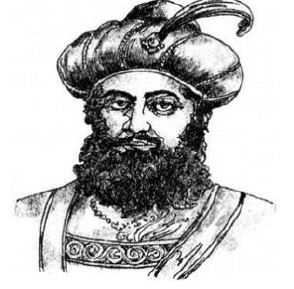
Question 1. Identify the person in the picture.
Answer: Muhammad Ghori
In simple words: This picture is of the Turkish ruler, Muhammad Ghori.
Exam Tip: Study textbook pictures carefully as they can appear in the exam as picture-based questions.
Question 2. Why did he invade India?
Answer: Muhammad Ghori wanted to conquer India to add its great wealth to his kingdom. He started by taking over border areas like Multan, Sind, and Punjab to open his path.
In simple words: Ghori attacked India to take its wealth and add new lands to his empire.
Exam Tip: Mention both reasons: capturing India's wealth and extending his empire's borders.
Question 3. The Battles of Tarain laid the foundations of Turkish rule in North India. Do you agree? Why?
Answer: Yes, we agree. After winning at Tarain, Ghori defeated and killed King Jaichand of Kanauj. He then joined these Indian lands to his empire and left Qutbuddin Aibak in charge as his viceroy.
In simple words: Yes, because winning this battle let Ghori take over Delhi, defeat other kings, and set up a lasting Turkish government.
Exam Tip: Support your "Yes" with evidence like the defeat of Jaichand and the appointment of Aibak as viceroy.
Question 4. Explain the causes of the success of the Turkish invaders against the Rajputs.
Answer: The Turkish invaders succeeded because the Rajput rulers were divided. Even though Prithviraj tried to form a group of rulers, the powerful King Jaichand of Kanauj refused to join him. This division allowed Ghori to easily defeat the Rajput army at Tarain.
In simple words: The Turks won because the Rajputs did not fight together. Since Jaichand did not help Prithviraj, the Turkish army won easily.
Exam Tip: Point out the lack of unity among Rajput chiefs and the division between Prithviraj and Jaichand as the primary cause of Turkish success.
Free study material for History Civics
ICSE Selina Concise Solutions Class 7 History Civics Chapter 3 The Turkish Invaders
Students can now access the detailed Selina Concise Solutions for Chapter 3 The Turkish Invaders on our portal. These solutions have been carefully prepared as per latest ICSE Class 7 syllabus. Each solution given above has been updated based on the current year pattern to ensure Class 7 students have the most updated History Civics content.
Master Selina Concise Textbook Questions
Our subject experts have provided detailed explanations for all the questions found in the Selina Concise textbook for Class 7 History Civics. We have focussed on making the concepts easy for you in Chapter 3 The Turkish Invaders so that students can understand the concepts behind every answer. For all numerical problems and theoretical concepts these solutions will help in strengthening your analytical skill required for the ICSE examinations.
Complete History Civics Exam Preparation
By using these Selina Concise Class 7 solutions, you can enhance your learning and identify areas that need more attention. We recommend solving the History Civics Questions from the textbook first and then use our teacher-verified answers. For a proper revision of Chapter 3 The Turkish Invaders, students should also also check our Revision Notes and Sample Papers available on studiestoday.com.
FAQs
You can download the verified Selina Concise solutions for Chapter 3 The Turkish Invaders on StudiesToday.com. Our teachers have prepared answers for Class 7 History Civics as per 2026-27 ICSE academic session.
Yes, our solutions for Chapter 3 The Turkish Invaders are designed as per new 2026 ICSE standards. 40% competency-based questions required for Class 7, are included to help students understand application-based logic behind every History Civics answer.
Yes, every exercise in Chapter 3 The Turkish Invaders from the Selina Concise textbook has been solved step-by-step. Class 7 students will learn History Civics conceots before their ICSE exams.
Yes, follow structured format of these Selina Concise solutions for Chapter 3 The Turkish Invaders to get full 20% internal assessment marks and use Class 7 History Civics projects and viva preparation as per ICSE 2026 guidelines.