

ICSE Solutions Selina Concise Class 7 History Civics Chapter 1 Medieval Europe Rise and Spread of Christianity have been provided below and is also available in Pdf for free download. The Selina Concise ICSE solutions for Class 7 History Civics have been prepared as per the latest syllabus and ICSE books and examination pattern suggested in Class 7. Questions given in ICSE Selina Concise book for Class 7 History Civics are an important part of exams for Class 7 History Civics and if answered properly can help you to get higher marks. Refer to more Chapter-wise answers for ICSE Class 7 History Civics and also download more latest study material for all subjects. Chapter 1 Medieval Europe Rise and Spread of Christianity is an important topic in Class 7, please refer to answers provided below to help you score better in exams
Selina Concise Chapter 1 Medieval Europe Rise and Spread of Christianity Class 7 History Civics ICSE Solutions
Class 7 History Civics students should refer to the following ICSE questions with answers for Chapter 1 Medieval Europe Rise and Spread of Christianity in Class 7. These ICSE Solutions with answers for Class 7 History Civics will come in exams and help you to score good marks
Chapter 1 Medieval Europe Rise and Spread of Christianity Selina Concise ICSE Solutions Class 7 History Civics
- Medieval Europe - Rise and Spread of Christianity
Important Words
- Medieval - The word medieval comes from Latin and means the middle time. This period lies between the ancient world and modern times.
- Messiah - This term refers to a savior. They are expected to set people free from unfair rulers, especially the promised savior of Jewish people.
- Christ - A special title given to Jesus that means the chosen savior.
- Old Testament - The first big section of the Christian Bible. It is usually split into laws, historical accounts, poems, and teachings from prophets.
- Baptism - A holy Christian ritual where water is poured on a person or they are dipped in water. It shows spiritual cleaning and joins them to the church.
- Resurrected - Coming back to life after dying.
- Gospels - The opening four books in the second section of the Bible. They share the stories of the life of Jesus and his lessons.
- Goths, Vandals, and Franks - These were different groups of people from Europe. They attacked the Roman and Greek lands during the early middle ages.
- Crusades - These were religious wars fought by Christians against the Turks. The Turks had taken over Jerusalem and lands belonging to the ruler of Constantinople.
Time To Learn
I. Fill in the blanks:
Question 1. Christianity was founded by _______. He began preaching at the age of _______.
Answer: Jesus Christ, thirty.
In simple words: Jesus Christ started the religion of Christianity. He began sharing his ideas when he was thirty years old.
Exam Tip: Remember the founder's name and the exact age he started teaching, as these are common short-answer questions.
Question 2. Jesus criticised all _______ and _______.
Answer: harmful activities, evils.
In simple words: Jesus spoke out against bad habits and wrong behaviors.
Exam Tip: Pay attention to synonyms like "bad deeds" or "wrongdoings" when practicing fill-in-the-blank questions.
Question 3. Galerius Constantine recognised _______.
Answer: Christianity.
In simple words: The Roman rulers finally accepted the Christian religion.
Exam Tip: Be ready to name the Roman emperors who played key roles in making Christianity legal.
Question 4. Constantine established a new capital at _______ in AD 330.
Answer: Byzantine.
In simple words: Emperor Constantine set up his new ruling city at Byzantium in the year 330 AD.
Exam Tip: Remember both the original name "Byzantine" and the year AD 330 for the founding of the new capital.
Question 5. The last Roman emperor, Romulus Augustus was deposed in _______.
Answer: AD 476.
In simple words: Romulus Augustus, who was the final ruler of Rome, was removed from power in 476 AD.
Exam Tip: AD 476 is widely considered the year the Western Roman Empire fell, so memorize this date carefully.
II. Match Column A with Column B:
Question 6. Match the following items from Column A with the correct descriptions in Column B:
| Column A | Column B |
|---|---|
| 1. Christmas | (a) Holy Book of Christians |
| 2. Easter | (b) Recognised Christianity |
| 3. Good Friday | (c) 1453 |
| 4. Bible | (d) Day of Crucifixion |
| 5. Constantine | (e) Resurrection |
| 6. Fall of Constantinople | (f) Christ's birthday |
Answer:
1. Christmas - (f) Christ's birthday
2. Easter - (e) Resurrection
3. Good Friday - (d) Day of Crucifixion
4. Bible - (a) Holy Book of Christians
5. Constantine - (b) Recognised Christianity
6. Fall of Constantinople - (c) 1453
In simple words: Match major Christian events and historical names to their correct meanings and dates. For example, Christmas is the day Jesus was born, and Constantinople fell in 1453.
Exam Tip: Always double-check your matches by writing the full pairs next to each other to avoid simple numbering mistakes.
III. State whether the following statements are True or False:
Question 7. State whether the following statements are True or False:
(i) Paul spread the teachings of Christ in Greece and Rome.
(ii) Emperor Charlemagne recognised Christianity in AD 313.
(iii) The head of the Roman Church, the Pope, was considered the representative of Christ on Earth.
(iv) Constantinople fell in AD 1453.
(v) Crusades were fought between Hindus and Christians.
Answer:
(i) True. Paul was an apostle who traveled to Greece and Rome to share the message of Jesus.
(ii) False. It was actually Emperor Constantine who accepted Christianity in AD 313, not Charlemagne.
(iii) True. People believed the Pope was the leader of the church on Earth.
(iv) True. The city of Constantinople was captured by the Turks in the year 1453.
(v) False. The Crusades were fought between Christians and Muslims.
In simple words: Learn which historical facts about early Christianity are correct, such as Constantine making it legal in 313 AD.
Exam Tip: If a statement is False, always write down the correct fact to show the examiner you fully understand the topic.
IV. Answer the following questions briefly:
Question 8. Where was Christ born? Why was he crucified?
Answer: Jesus was born in Bethlehem, which was a small place near Jerusalem. He was born around 4 BC to Jewish parents, Mary and Joseph. He taught people to believe in one God. He also spoke about love, kindness, and treating others like brothers. He was not afraid to speak out against bad things and wrong actions. Because of this, wealthy and powerful Roman leaders turned against him. They went to Pontius Pilate, who was the Roman ruler of Palestine. They claimed that Jesus called himself the king of the Jews and was trying to start a rebellion. Jesus was captured and killed on a cross. Since then, the cross has been a holy symbol for Christians.
In simple words: Jesus was born in Bethlehem. He was crucified because powerful Roman rulers felt threatened by his teachings of love and equality.
Exam Tip: Be sure to name Bethlehem as the birthplace and Pontius Pilate as the governor who ordered the crucifixion to get full marks.
Question 9. Describe the teachings of Christ.
Answer: Jesus shared his ideas using simple language and stories that regular people could easily follow. His main lessons included:
1. Every person is a sibling since we are all created by the same God.
2. There is only one God, so praying to many different gods is not useful.
3. God is very merciful and will forgive bad actions if a person is truly sorry.
4. If we show love and kindness to others, God will love us in return.
5. Dislike the bad deed, but do not dislike the person who did it.
6. Stay away from bad traits like being greedy or proud.
7. Jesus described himself as the Son of God sent to show humans the path to heaven.
8. People can create a holy world if they let God's love clean their hearts.
In simple words: Jesus used simple stories to teach about loving one single God, forgiving others, and staying away from greed.
Exam Tip: Memorize at least four to five key teachings, and use simple bullet points to present them clearly in your exam.
Question 10. Discuss the contribution of emperor Constantine in spread of Christianity.
Answer: The Roman ruler Constantine beat all his opponents who tried to block his path. After becoming the sole emperor, he declared Christianity to be a lawful religion. This step stopped the cruel treatment of Christians. Over time, Christianity grew to become the main state religion of Rome.
In simple words: Emperor Constantine made Christianity legal, which stopped the abuse of Christians and made it the state religion.
Exam Tip: Be sure to highlight that Constantine ended the persecution of Christians and legalized the religion in the Roman Empire.
Question 11. Describe the emergence and fall of Constantinople.
Answer:
Rise of the City: In 330 AD, Emperor Constantine set up a new ruling city at Byzantium. People later named this grand city Constantinople in his honor. This capital of the Byzantine Empire grew rich and lasted for ten centuries. It kept strong trade connections with eastern lands like India. The rulers constructed gorgeous churches decorated with fine art. Soon, it became the biggest and richest city across Europe.
The Fall: Many enemies tried to capture Constantinople over the years, but only one succeeded. The Ottoman Turks, led by Sultan Mehmed II, brought a massive army of over one hundred thousand soldiers. In contrast, the city had only ten thousand defenders. The battle lasted for nearly fifty days. Even though the defenders tried every trick they knew, they were far too small in number. The Turks also blocked the local harbors and water routes. Finally, on Tuesday, May 29, 1453, the city had to give up, and the Ottomans took total control.
In simple words: Constantinople was a grand city founded by Constantine. It fell in 1453 when a massive Turkish army overcame its few defenders after a fifty-day battle.
Exam Tip: Clearly separate your answer into two parts: the rise of the city under Constantine, and its eventual fall to Sultan Mehmed II in 1453.
Question 12. Discuss the reasons for the decline of the Roman empire.
Answer: Fierce tribal groups attacked deep inside Roman lands, stealing treasures and destroying towns. They even attacked the grand city of Rome itself. Over time, these groups moved in and took over the western regions of Rome, which caused the empire to fall.
In simple words: Rome fell because outside tribes repeatedly attacked and took control of its western lands.
Exam Tip: Mention the term "barbarian invasions" or tribal raids and explain how they settled in the western regions to show a complete understanding of Rome's fall.
V. Picture Study : Study the picture and answer the following questions.
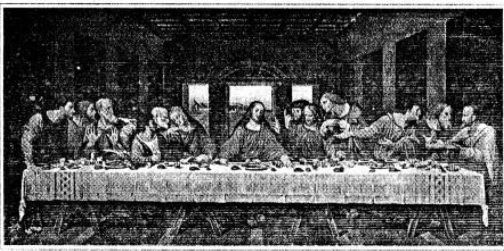
Question 13. Study the picture of the historic meal and answer the following questions:
(i) Identify and name the painting.
(ii) Name the Painter.
(iii) Describe the theme of the painting.
Answer:
(i) The painting is called "The Last Supper."
(ii) It was painted by the famous artist Leonardo da Vinci.
(iii) The artwork shows Jesus having his final meal with his close followers.
In simple words: This famous painting shows Jesus eating his last dinner with his disciples, and it was created by Leonardo da Vinci.
Exam Tip: For picture-based questions, make sure you spell the artist's name (Leonardo da Vinci) correctly to secure full points.
Additional Questions - Rise of Christianity
A. Fill in the blanks:
Question 14. Fill in the blank: In the middle of the 1st century bce the _______ conquered Palestine, the homeland of the Jews.
Answer: Romans.
In simple words: The Romans took control of Palestine, where Jewish people lived, in the first century BC.
Exam Tip: Memorize the specific ruling powers of the era, such as the Romans, to excel in fill-in-the-blank questions.
Question 15. Fill in the blank: Jesus was believed to be the son of _______. He was born to Mary.
Answer: God.
In simple words: Christians believe Jesus is God's son, and Mary was his mother.
Exam Tip: Keep basic Christian beliefs and parental names in mind for simple history questions.
Question 16. Fill in the blank: For _______ years, Jesus travelled throughout Galilee, preaching, teaching and healing the sick.
Answer: three.
In simple words: Jesus spent three years traveling around Galilee to teach people and heal those who were ill.
Exam Tip: Pay attention to the timeline of Jesus's public ministry, which lasted for three years.
Question 17. Fill in the blank: Jesus taught that there was _______ God who was compassionate, loving and forgiving.
Answer: one.
In simple words: Jesus told people that there is only one God, who is kind and forgives them.
Exam Tip: Monotheism, or the belief in a single God, is a core teaching of Christianity that often comes up in exams.
Question 18. Fill in the blank: Towards the end of the 4th century ce, Christianity became the _______ religion of the Roman empire.
Answer: official.
In simple words: By the late 300s AD, Rome made Christianity its main national religion.
Exam Tip: Focus on the transition of Christianity from a persecuted group to the official state religion by the late 4th century.
B. Match the following:
Question 19. Match the following items related to the rise of Christianity:
| Column A | Column B |
|---|---|
| 1. Jesus | (a) spread Christianity outside Palestine |
| 2. Mark | (b) first Christian Roman emperor |
| 3. Peter | (c) founder of Christianity |
| 4. Paul | (d) one of the authors of the Gospels |
| 5. Constantine | (e) spread Christianity in Palestine |
Answer:
1. Jesus - (c) founder of Christianity
2. Mark - (d) one of the authors of the Gospels
3. Peter - (e) spread Christianity in Palestine
4. Paul - (a) spread Christianity outside Palestine
5. Constantine - (b) first Christian Roman emperor
In simple words: Match early Christian leaders to their roles. Jesus started the religion, Mark helped write the scriptures, Peter worked in Palestine, Paul went abroad, and Constantine was Rome's first Christian emperor.
Exam Tip: Be clear on the difference between Peter (who focused on Palestine) and Paul (who traveled extensively across the wider Roman Empire).
C. Choose the correct answer:
Question 20. Where did Jesus grow up and study Jewish scriptures?
(a) Bethlehem
(b) Jerusalem
(c) Nazareth
(d) Rome
Answer: (c) Nazareth
In simple words: Jesus spent his childhood in Nazareth, where he learned the holy scriptures of the Jewish faith.
Exam Tip: Do not confuse Bethlehem (where Jesus was born) with Nazareth (where he grew up and lived during his childhood).
Question 21. Jesus taught that God loved and _______ sinners.
(a) forgave
(b) hated
(c) ignored
(d) punished
Answer: (a) forgave
In simple words: Jesus said that God is loving and forgives people who have done wrong things.
Exam Tip: The message of forgiveness is central to Jesus's teachings and is a highly tested concept.
Question 22. Who sentenced Jesus to death?
(a) Maxentius
(b) Pontius Pilate
(c) Constantine
(d) Romulus Augustus
Answer: (b) Pontius Pilate
In simple words: Pontius Pilate, the Roman governor, gave the order to execute Jesus.
Exam Tip: Always associate Pontius Pilate with the final trial and execution of Jesus in historical contexts.
Question 23. Who was most active in spreading the teachings of Jesus inside Palestine?
(a) John
(b) Mark
(c) Peter
(d) Paul
Answer: (c) Peter
In simple words: Peter was the main follower who stayed in Palestine to share what Jesus taught.
Exam Tip: Remember that Peter spread Christianity primarily inside Palestine, while Paul was famous for spreading it outside.
Question 24. For nearly 300 years after Jesus died, how were Christians treated in the Roman Empire?
(a) treated well
(b) given special rights
(c) oppressed and persecuted
(d) ignored completely
Answer: (c) oppressed and persecuted
In simple words: For three centuries, Romans treated Christians very badly and punished them for their faith.
Exam Tip: Be sure to know that early Christians faced extreme hardships and danger before their religion became legal.
D. State whether the following are true or false:
Question 25. State whether the following statements are True or False:
(i) Jesus had the power to heal the sick.
(ii) Jesus taught that we should harm only those who harm us.
(iii) Jesus's interpretation of Jewish law was the same as that of other Jewish religious leaders.
(iv) In the 4th century CE, Christianity became the official religion of the Roman empire.
(v) The Pope became the spiritual head of Christians all over the world.
Answer:
(i) True. Jesus is believed to have healed many people who were sick.
(ii) False. Jesus taught that people should help those in need and show love even to those who do them harm.
(iii) False. His understanding of the laws often went against the views of the traditional Jewish leaders.
(iv) True. By the end of the 4th century CE, Christianity was made the official state religion of the Roman Empire.
(v) True. The Pope became recognized as the main spiritual leader of all Christians globally.
In simple words: Jesus taught love and healing, often clashed with other leaders, and his followers established the Pope as their global head.
Exam Tip: Be careful with tricky history dates. Christianity was officially adopted by Rome in the late 4th century CE, not earlier.
E. Answer the following questions in one or two words/ sentences:
Question 26. Explain the Latin origin of the term 'medieval'.
Answer: The word comes from Latin roots meaning the middle time. It marks the historical era that sits between ancient times and the modern era.
In simple words: The word "medieval" comes from Latin and means "the middle age" in history.
Exam Tip: Define both the Latin meaning and its position between the ancient and modern periods to get full marks.
Question 27. Who conquered Palestine in the middle of the 1st century BCE?
Answer: The Roman armies took over Palestine, which was the homeland of the Jewish people, during the middle of the first century BC.
In simple words: The Romans took over the Jewish homeland in the middle of the first century BC.
Exam Tip: Ensure you mention both the conquerors (Romans) and that Palestine was the Jewish homeland.
Question 28. Where was Jesus born?
Answer: Jesus was born around 6 to 4 BC in the tiny village of Bethlehem in Judea. Christians believe he is God's son, born to Mary.
In simple words: Jesus was born in Bethlehem, a small village, to his mother Mary.
Exam Tip: State both the location (Bethlehem in Judea) and the approximate time period (6-4 BC) for a complete answer.
Question 29. Who was King David?
Answer: He was the most celebrated ruler of Israel, who freed his country from outside rule about a thousand years before Jesus's time.
In simple words: King David was a famous ruler who set Israel free from enemy control long ago.
Exam Tip: Identify David as a famous king of Israel and mention his achievement of freeing Israel from foreign rule.
Question 30. How many disciples did Jesus have?
Answer: Jesus brought together a close group of 12 followers.
In simple words: Jesus had 12 close followers.
Exam Tip: Use the exact number "12" in your answer as it is the key factual point.
Question 31. Mention two fundamental principles of Christianity?
Answer: The primary values of Christianity are having complete love for God and showing genuine love to the people around you.
In simple words: The two main rules are to love God completely and to love your neighbors.
Exam Tip: Learn these two core concepts as they form the foundation of most questions about Christian teachings.
Question 32. Why were the Jewish religious leaders angry with Jesus?
Answer: Large groups of people flocked to Jesus because of his smart, kind, and simple way of teaching. This made Jewish leaders angry because they felt his popularity challenged their power.
In simple words: Jesus became very popular because he was wise and kind, which made the old leaders feel threatened.
Exam Tip: Focus on Jesus's growing popularity and how it threatened the authority of the existing religious leaders.
Question 33. Where are the life and teachings of Jesus Christ recorded?
Answer: The details of his life and lessons are kept in the Gospels, written by four followers named Matthew, Mark, Luke, and John.
In simple words: His life stories are written in the Gospels by four of his followers.
Exam Tip: Remember to name the four Gospels - Matthew, Mark, Luke, and John - as they are highly likely to be tested.
Question 34. Who is described as the 'foundation rock' of Christianity?
Answer: Peter is called the main foundation stone of the Christian faith.
In simple words: Peter is known as the "foundation rock" of the church.
Exam Tip: Association of Peter with the "foundation rock" is a crucial point in early Church history.
Question 35. Who prepared the grounds for transforming Christianity into a world religion?
Answer: Paul, who joined the faith later in life, became its most energetic supporter. He made long journeys across the Roman territories, setting up the foundation to help Christianity grow into a global religion.
In simple words: Paul traveled a lot and worked hard to share the religion with different countries, making it popular worldwide.
Exam Tip: Highlight Paul's travels throughout the Roman Empire to explain how Christianity spread beyond Palestine.
Question 36. What is the importance of St Peter's Church in Rome?
Answer: This church serves as the main spiritual center for Christians around the globe.
In simple words: It is the main head office of the Christian religion.
Exam Tip: Use the term "religious headquarters" or "spiritual center" to describe its role.
Question 37. Who became the spiritual head of the Christians?
Answer: The Pope, who is the bishop in charge of St Peter's Church, became the global leader of the faith. People saw him as the earthly representative of Jesus.
In simple words: The Pope, the leader of the church in Rome, became the top spiritual leader of all Christians.
Exam Tip: Be sure to connect the title "Pope" with "Bishop of St Peter's Church" and "representative of Christ" for a complete answer.
F. Answer the following questions briefly:
Question 38. Give an account of the early life of Jesus in Nazareth. What happened after his baptism?
Answer: Jesus spent his youth in the northern Palestinian town of Nazareth, studying Jewish holy books. He noticed that some groups, like the Pharisees, were following traditions that broke the ancient laws of Moses. After his baptism, he felt a holy calling. This made him realize he must start his mission to free people from bad influences and show them how to make good win over evil.
In simple words: Jesus grew up studying holy books in Nazareth. After being baptized, he felt called by God to help people turn away from evil.
Exam Tip: Mention Nazareth, the Laws of Moses, and his post-baptism mission to lead people toward goodness to score high marks.
Question 39. The teachings of Jesus were simple, yet revolutionary. Explain.
Answer: Jesus shared rules for living that were easy to understand but totally changed how people thought. He wanted everyone to love God fully and show deep care for other people. He taught that God is full of mercy, love, and forgiveness. He urged people to act like God by being kind. This meant loving neighbors, helping poor people, and even loving enemies. Instead of seeking revenge, Jesus said we must forgive those who hurt us. He completely rejected the old rule of getting even, which was known as "an eye for an eye."
In simple words: Jesus taught people to love everyone, help the needy, and forgive their enemies instead of fighting back.
Exam Tip: Contrast Jesus's teachings of love and forgiveness with the traditional "eye for an eye" law to show why his ideas were revolutionary.
Question 40. Discuss the reasons and events leading to the crucifixion of Jesus.
Answer: Everywhere Jesus traveled, huge crowds gathered because of his smart, kind, and simple teachings. This upset the Jewish religious leaders, who felt their own power slipping away. They went to the Roman Governor, Pontius Pilate, and argued that Jesus was a danger to Roman rule. As a result, Jesus was arrested, put on trial, and put to death on a cross.
In simple words: Jewish leaders were jealous of Jesus's popularity. They told the Roman governor that Jesus was a rebel, leading to his arrest and crucifixion.
Exam Tip: Clearly state that it was the combination of religious jealousy and the political threat presented to Pontius Pilate that led to the crucifixion.
Question 41. The enemies of Jesus had crucified him but Jesus would live on. Explain.
Answer: Even though his enemies killed him, Jesus stayed alive in the hearts and thoughts of his followers globally. People kept sharing his ideas and living by his guidelines. His message of kindness, freeing people from bad habits, and making good win over evil continued to guide millions of lives.
In simple words: Though Jesus died, his loving teachings lived on and kept changing the lives of his followers.
Exam Tip: Explain "living on" in terms of his legacy, his teachings, and the spread of his message by his devoted followers.
Question 42. Give a brief account of the spread of Christianity by its followers.
Answer: Peter worked hard to share the message of Jesus inside Palestine. Meanwhile, Paul took long journeys across the Roman Empire to teach others. Their combined efforts helped Christianity grow from a small group into a major global religion.
In simple words: Peter spread the religion inside Palestine, while Paul traveled far across the Roman world to share it.
Exam Tip: Name Peter and Paul as the two primary figures, and distinguish their separate areas of focus (inside vs. outside Palestine).
Question 43. What role did Emperor Constantine play in the establishment of Christianity in Europe?
Answer: Emperor Constantine overcame all his rivals to become the sole leader of Rome. He decided to make Christianity a legal and accepted faith, which stopped the cruel treatment of believers. Eventually, this led to Christianity becoming the main religion of the Roman state.
In simple words: Emperor Constantine stopped the persecution of Christians and made the religion legal, helping it spread across Rome.
Exam Tip: Emphasize how Constantine legalized Christianity, ending persecution and setting the path for it to become the state religion.
G. Picture study
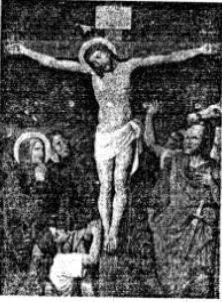
Question 44. Study the picture depicting the crucifixion and name (i) the founder and (ii) the religion.
Answer:
(i) The founder is Jesus Christ.
(ii) The religion is Christianity.
In simple words: The picture shows Jesus Christ, who started the Christian faith.
Exam Tip: Make sure you link the event of crucifixion directly with the founding of Christianity.
Question 45. Mention the circumstances and the reasons that led to the crucifixion.
Answer: Jesus became very popular due to his simple and wise teachings of love. This popularity worried the Jewish leaders, who feared losing their influence. They told the Roman Governor, Pontius Pilate, that Jesus was a threat to Rome's power. Consequently, Jesus was arrested and put to death on a cross.
In simple words: Jesus's popularity made Jewish leaders jealous, so they accused him of being a rebel before the Roman governor, leading to his death.
Exam Tip: Be concise but include both the religious opposition and the political accusation when explaining his trial.
Question 46. Mention four important principles of the religion.
Answer:
1. Show love to everyone around you, including poor people, wrongdoers, and enemies.
2. Forgive those who hurt you and show them kindness instead of anger.
3. Have deep and complete love for God.
4. Reject the idea of getting revenge or hurting others back.
In simple words: The main rules are to love everyone, forgive people who hurt you, love God, and do not seek revenge.
Exam Tip: Use a numbered list to state these principles clearly, and mention the rejection of revenge to earn full points.
Question 47. Name the two best-known followers of the founder. What part did they play in spreading his teachings?
Answer: Peter and Paul are the most famous early followers. They worked hard to spread Jesus's teachings inside Palestine and across the wide Roman Empire. Their tireless work helped Christianity become a global faith.
In simple words: Peter and Paul shared the teachings far and wide, helping the religion grow across the world.
Exam Tip: Be sure to state that their efforts reached both local (Palestine) and international (Roman Empire) areas.
A. Fill in the blanks:
Question 48. Fill in the blank: The great Roman empire began to disintegrate in the _______ century ce.
Answer: 5th.
In simple words: The Roman Empire started to break apart during the fifth century AD.
Exam Tip: Remember the 5th century as the period when the Western Roman Empire began to break down.
Question 49. Fill in the blank: One important reason for the fall of the Roman empire was the repeated attacks by the _______ tribes.
Answer: Germanic.
In simple words: Constant attacks from Germanic tribes helped cause the fall of Rome.
Exam Tip: Be precise about the name "Germanic" when referring to the invading tribes.
Question 50. Fill in the blank: In 395 ce, the Roman empire was divided into two parts - eastern and western.
Answer: eastern, western.
In simple words: In 395 AD, the empire was split into an Eastern half and a Western half.
Exam Tip: Remember the division of the empire into Eastern and Western parts in 395 CE for history questions.
Question 51. Fill in the blank: By 900 ce, Christianity had become the _______ religion in every European state.
Answer: state.
In simple words: By the year 900 AD, Christianity was the main religion chosen by governments across Europe.
Exam Tip: Know that by the turn of the 10th century, Christianity was established as the primary religion in European kingdoms.
Question 52. Fill in the blank: The Crusades or holy wars were fought between the Christians and the Turkish Muslims, between the _______ and _______ centuries ce.
Answer: 11th, 13th.
In simple words: The religious wars called the Crusades were fought between the 11th and 13th centuries.
Exam Tip: Memorize the timeline of the Crusades, which spanned from the 11th to the 13th century CE.
B. Match the following:
Question 53. Match the following items related to medieval European history:
| Column A | Column B |
|---|---|
| 1. Invaders | (a) Convents |
| 2. Oxford University | (b) Holy wars |
| 3. Jerusalem | (d) Holy land of the Christians |
| 4. Crusades | (b) Holy wars |
| 5. Monasteries | (a) Convents |
Answer:
1. Invaders - (c) Vandals
2. Oxford University - (e) Built by the Church
3. Jerusalem - (d) Holy land of the Christians
4. Crusades - (b) Holy wars
5. Monasteries - (a) Convents
In simple words: Match keywords: the Vandals were invaders, Oxford was started by the church, Jerusalem is the holy land, Crusades were holy wars, and monasteries are like convents.
Exam Tip: Be sure to link Oxford University with its origins in the Christian Church and monasteries with convents.
C. Choose the correct answer
Question 54. Which mighty empire began to disintegrate in the 5th century CE?
(a) Turkish
(b) Roman
(c) Greek
(d) Byzantine
Answer: (b) Roman
In simple words: The big Roman Empire started falling apart in the fifth century AD.
Exam Tip: Identify the 5th century as the key era for the decline of the Western Roman Empire.
Question 55. What was the capital of the Byzantine Empire?
(a) Rome
(b) Jerusalem
(c) Constantinople
(d) Alexandria
Answer: (c) Constantinople
In simple words: Constantinople was the capital city of the Byzantine Empire.
Exam Tip: Do not confuse Rome with Constantinople; Constantinople was the capital of the Eastern (Byzantine) Roman Empire.
Question 56. Who stayed in the great monasteries built by the religious orders?
(a) monks
(b) kings
(c) soldiers
(d) merchants
Answer: (a) monks
In simple words: Monasteries were built as quiet homes for monks to live and do their religious work.
Exam Tip: Remember that monasteries are specifically for monks, while nunneries are for nuns.
Question 57. Who invaded the lands of the Christian emperor of Constantinople in the 11th century CE?
(a) Goths
(b) Turks
(c) Vandals
(d) Franks
Answer: (b) Turks
In simple words: In the 1000s AD, the Turks attacked the lands ruled by the Christian emperor of Constantinople.
Exam Tip: Distinguish between the early invaders of Rome (like Goths and Vandals) and the later medieval invaders of Constantinople (the Turks).
Question 58. From whom did the Crusaders learn the use of gunpowder and guns?
(a) Greeks
(b) Franks
(c) Turks
(d) Romans
Answer: (c) Turks
In simple words: The European Crusaders learned how to use guns and gunpowder from the Turks during their wars.
Exam Tip: This transfer of technology (gunpowder) is a major result of the Crusades and is highly tested.
D. State whether the following are true or false:
Question 59. State whether the following statements are True or False:
(i) The invaders who attacked the Roman empire were semi-civilized tribes.
(ii) In the confusion and disorder that followed the disintegration of the Roman empire, the only unifying factor was Christianity and the Roman Church.
(iii) The spread of Christianity was one of the most important developments in the Early Medieval Period.
(iv) By the end of the 5th century ce, Christian churches had been established in almost every town and city.
(v) The greatest contribution of the monasteries was in the field of education.
Answer:
(i) True. The tribes that raided Roman territories lived in a semi-civilized state.
(ii) True. When Rome fell apart, the Christian Church was the single major power keeping people together.
(iii) True. The growth of the Christian faith was a major event in the early middle ages.
(iv) True. By 500 AD, almost every city and town had its own Christian church.
(v) True. Monasteries did their best work by teaching people and setting up schools.
In simple words: These facts explain how the Christian Church became the main source of stability, education, and unity in Europe after Rome fell.
Exam Tip: Remember that after the fall of Rome, the Church stepped in as the main unifying social force in Europe.
E. Answer the following questions in one or two words/ sentences:
Question 60. What were the 'barbarian invasions'?
Answer: These were constant raids and attacks on Roman lands by Germanic groups, including the Franks, Goths, and Vandals.
In simple words: This term refers to the many attacks on Rome by tribes like the Goths and Franks.
Exam Tip: Be sure to list at least two of the Germanic tribes (Goths, Vandals, or Franks) to show complete knowledge.
Question 61. Name the capital of the eastern Roman empire.
Answer: The capital of the East Roman Empire was Constantinople, which is now called Istanbul.
In simple words: The capital of the eastern side was Constantinople.
Exam Tip: Mention both its historical name (Constantinople) and modern name (Istanbul) to show thorough research.
Question 62. What effect did the barbarian invasions have on the Byzantine (eastern Roman) empire?
Answer: Even though tribal groups attacked the Eastern Empire, it was much stronger than the West. It successfully defended itself and kept the heritage of Rome safe.
In simple words: The eastern empire survived the attacks because it was stronger than the western empire.
Exam Tip: Use terms like "resilient" or "survived" to explain how the Byzantine Empire fared better than the Western Roman Empire.
Question 63. What were the Crusades?
Answer: The Crusades were holy battles fought by Christians against the Turks. The Turks had taken control of the Christian territories in Constantinople and the sacred city of Jerusalem.
In simple words: The Crusades were religious wars fought by Christians to take back holy lands from the Turks.
Exam Tip: Identify both the participants (Christians and Turks) and the contested regions (Constantinople and Jerusalem).
Question 64. How did the Crusades pave the way for the Renaissance?
Answer: While traveling to the sacred lands, European fighters met advanced Greek and Muslim societies. They brought back the best parts of these cultures, which helped restart school learning in the West and eventually led to the Renaissance.
In simple words: Crusaders met advanced societies on their travels and brought home new ideas, which sparked a love for learning in Europe.
Exam Tip: Explain that contact with Greek and Muslim civilizations allowed Europeans to absorb advanced knowledge, triggering a revival of learning.
Question 65. How did the Crusades lead to the decline of feudalism?
Answer: During the wars, the fighters learned how to make guns and gunpowder from Muslim armies. These new weapons made heavily armored knights outdated, which helped bring down the feudal system.
In simple words: Gunpowder and guns learned from the Muslims made the knights' armor useless, which weakened the power of feudal lords.
Exam Tip: Directly link the introduction of gunpowder and firearms to the decline of the knight's role in medieval warfare.
Question 66. Where did the Christian monks live?
Answer: Monks resided in special communities called monasteries and remained unmarried.
In simple words: Monks lived together in quiet places called monasteries and did not get married.
Exam Tip: Mention the term "monasteries" and their vows, such as remaining unmarried, for a complete response.
Question 67. Name two arts that flourished in monasteries.
Answer: Skills like building design, wall paintings, wood art, and stained glass window painting grew popular inside these religious houses.
In simple words: Arts like wall painting, wood carving, and making stained glass windows became very popular in monasteries.
Exam Tip: List any two arts from the textbook (e.g., stained glass painting and wood carving) for a quick, high-scoring answer.
Question 68. Name one internationally renowned university that evolved from a Christian monastery.
Answer: Oxford University in England is a world-famous school that grew out of an early Christian monastery.
In simple words: Oxford University in England started as a monastery.
Exam Tip: Oxford University is the classic example of a major university that grew out of a monastic school.
F. Answer the following questions briefly:
Question 69. Briefly discuss the causes of the decline of the mighty Roman empire?
Answer: Tribal armies pushed deep into Roman lands, looting and ruining cities. They even plundered Rome itself. Over time, these groups settled down and took control of the western areas of the Roman state, leading to its collapse.
In simple words: Rome fell because tribal invaders constantly attacked and eventually took over the western parts of the empire.
Exam Tip: Explain how the combination of destruction from raids and the permanent settlement of these tribes undermined Roman authority.
Question 70. The Crusades brought about significant changes in medieval Europe. In this context, discuss the following:
(i) Advent of the Renaissance
(ii) Economic prosperity.
Answer:
(i) Start of the Renaissance: While traveling during the wars, the fighters met highly advanced Greek and Turkish cultures. They adopted many great ideas from these societies, which helped restart schools and learning in Europe, starting the Renaissance.
(ii) Wealth and Trade: The soldiers discovered comfortable and luxury lifestyles in Eastern lands. To bring these fancy items back home, European merchants set up new shipping and trade routes. This rising trade helped the European economy grow rich.
In simple words: The Crusades brought new knowledge that started a love for learning (the Renaissance) and opened trade routes that made Europe wealthy.
Exam Tip: Address both parts of the question separately, using clear sub-headings to make your paper easy to read and grade.
Question 71. Write short notes on the following:
(i) Monks and nuns
(ii) Life in a monasteries
Answer:
(i) Monks and Nuns: Monks were men who dedicated their entire lives to serving God and helping other people. They lived in monasteries and did not marry. Similarly, nuns were women who dedicated their lives to the same goals, living unmarried inside nunneries.
(ii) Life in Monasteries: These were the special buildings where monks lived. Rulers usually built them in quiet, lonely places far away from towns. The daily routine inside was very plain, quiet, and well-organized.
In simple words: Monks and nuns were religious men and women who lived simple, single lives in quiet, distant homes to serve God.
Exam Tip: Clarify the difference between where monks live (monasteries) and where nuns live (nunneries), and mention their simple lifestyle.
Question 72. Describe a monastery. What did the monks and nuns do for the welfare of the people?
Answer: A monastery was a big, sturdy, and plain building. It was often surrounded by fields, fruit trees, gardens, and ponds. Inside, there was a small chapel, bedrooms, a kitchen, and pantries. Many of these places also had schools, libraries, and medical clinics. Monks and nuns did very important work. Nuns taught children and cared for sick or injured people. Monasteries did their best work in schooling, and some even grew into famous colleges like Oxford and Cambridge. In these schools, people learned history, law, medicine, and other subjects along with religious books. Since printing had not been invented, the monks spent their time copying books by hand onto animal skin paper. This hard work saved many ancient Greek, Roman, and Christian writings for the future.
In simple words: Monasteries were big, quiet homes with schools and clinics. Monks and nuns helped the public by teaching kids, healing the sick, and copying books by hand.
Exam Tip: Mention both the physical structure of a monastery and the social work (education, healthcare, copying manuscripts) done by its residents.
Question 73. What was the contribution of the monasteries in the field of education?
Answer: The most important work of monasteries was in teaching. Over time, some monastic schools grew into famous universities like Oxford and Cambridge. In these places, students studied normal subjects like history, law, medicine, and science alongside religious teachings.
In simple words: Monasteries started schools that eventually grew into world-famous universities like Oxford and Cambridge.
Exam Tip: Always name Oxford and Cambridge as prime examples of universities that grew from monastic roots.
G. Picture study:
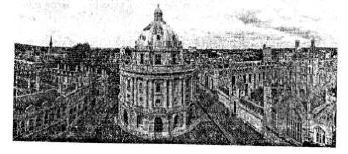
Question 74. Study the picture of the historic English university and identify it.
Answer: The university shown is Oxford University.
In simple words: The picture shows Oxford University in England.
Exam Tip: Oxford is one of the oldest universities in the English-speaking world, built originally by the Church.
Question 75. What part did the Church play in the field of education?
Answer: The Church was deeply involved in schooling. It established major centers for learning, art, literature, and religious studies. Famous institutions, such as the universities of Oxford and Cambridge, were originally constructed by the Church.
In simple words: The Church set up schools and built world-famous universities like Oxford and Cambridge to help people learn.
Exam Tip: Highlight that the Church set up institutions of higher learning, not just basic schools, to secure full marks.
Question 76. Mention any two reasons for the rapid spread of Christianity in Europe between 400 ce and 900.
Answer: First, when a king or local lord accepted the faith, all his people usually followed and converted too. Second, highly motivated Christian monks formed organized groups to travel and share the faith widely.
In simple words: Christianity spread fast because kings forced their people to convert, and hard-working monks traveled to teach the faith.
Exam Tip: Focus on two clear points: royal/noble conversions leading to mass conversion, and the systematic missionary work of monastic orders.
Question 77. In what way did the increase in wealth and power influence the policies of the Church?
Answer: As the Church gained more land and money, it grew very strict and demanding. It expected all Christians to show complete obedience, total loyalty, and to follow all of its rules without question.
In simple words: With more power and money, the Church became very strict and forced everyone to follow its rules exactly.
Exam Tip: Use strong descriptors like "authoritarian" or "strict" to describe the shift in the Church's stance as its wealth grew.
Question 78. What does the term 'Crusades' mean? How did the Crusades contribute to the revival of learning and pave the way for the Renaissance in Europe?
Answer: The Crusades were holy wars fought by Christians against Turkish Muslims. While traveling to the East, the Crusaders met highly advanced Greek and Muslim societies. They learned new ideas from these cultures, which sparked a desire for learning and set the foundation for the European Renaissance.
In simple words: The Crusades were holy wars. They helped spark the Renaissance because Crusaders brought back advanced ideas and science from Eastern cultures.
Exam Tip: Always define "Crusades" first, then explain the educational impact through cultural contact with Eastern civilizations.
Free study material for History Civics
ICSE Selina Concise Solutions Class 7 History Civics Chapter 1 Medieval Europe Rise and Spread of Christianity
Students can now access the detailed Selina Concise Solutions for Chapter 1 Medieval Europe Rise and Spread of Christianity on our portal. These solutions have been carefully prepared as per latest ICSE Class 7 syllabus. Each solution given above has been updated based on the current year pattern to ensure Class 7 students have the most updated History Civics content.
Master Selina Concise Textbook Questions
Our subject experts have provided detailed explanations for all the questions found in the Selina Concise textbook for Class 7 History Civics. We have focussed on making the concepts easy for you in Chapter 1 Medieval Europe Rise and Spread of Christianity so that students can understand the concepts behind every answer. For all numerical problems and theoretical concepts these solutions will help in strengthening your analytical skill required for the ICSE examinations.
Complete History Civics Exam Preparation
By using these Selina Concise Class 7 solutions, you can enhance your learning and identify areas that need more attention. We recommend solving the History Civics Questions from the textbook first and then use our teacher-verified answers. For a proper revision of Chapter 1 Medieval Europe Rise and Spread of Christianity, students should also also check our Revision Notes and Sample Papers available on studiestoday.com.
FAQs
You can download the verified Selina Concise solutions for Chapter 1 Medieval Europe Rise and Spread of Christianity on StudiesToday.com. Our teachers have prepared answers for Class 7 History Civics as per 2026-27 ICSE academic session.
Yes, our solutions for Chapter 1 Medieval Europe Rise and Spread of Christianity are designed as per new 2026 ICSE standards. 40% competency-based questions required for Class 7, are included to help students understand application-based logic behind every History Civics answer.
Yes, every exercise in Chapter 1 Medieval Europe Rise and Spread of Christianity from the Selina Concise textbook has been solved step-by-step. Class 7 students will learn History Civics conceots before their ICSE exams.
Yes, follow structured format of these Selina Concise solutions for Chapter 1 Medieval Europe Rise and Spread of Christianity to get full 20% internal assessment marks and use Class 7 History Civics projects and viva preparation as per ICSE 2026 guidelines.